By Dr. Fabrice Malonga, Field Veterinarian, Gorilla Doctors (DR Congo)
Most of my days are spent caring for mountain gorillas. But on Sunday, September 27, I found myself crouched in the forest near Lake Edward, about 200 meters from a six-ton bull elephant.
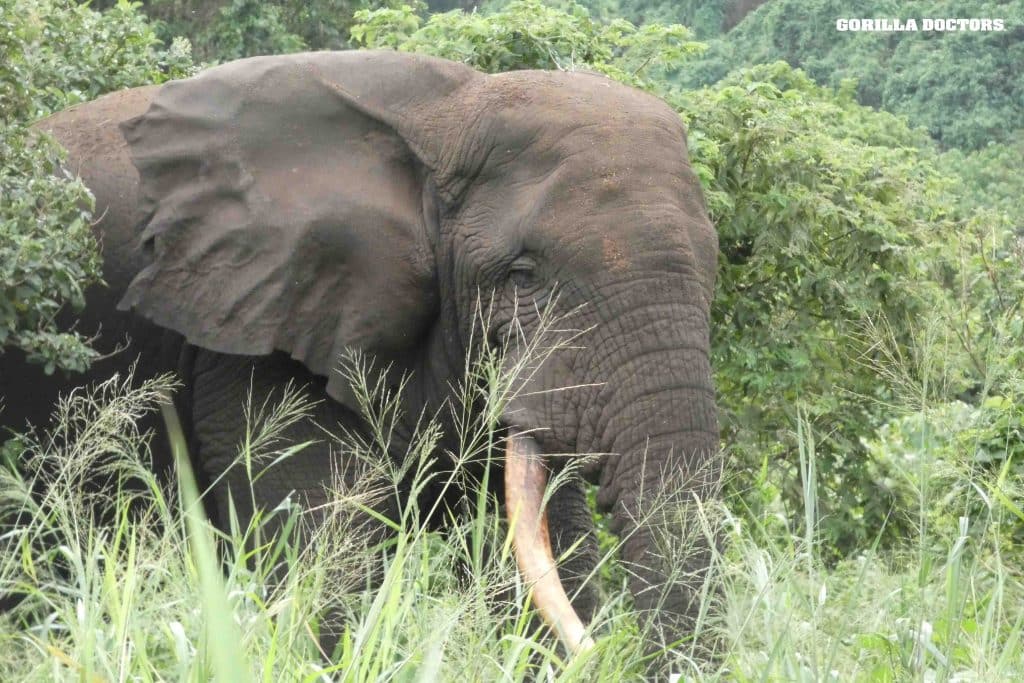
The bull elephant treated in Virunga National Park on 27 September 2026. © Gorilla Doctors
My colleagues Dr. Isabelle, Dr. Reginald, and I were already in the Ishango area of Virunga National Park. We had come to support anthrax outbreak surveillance along the Semliki River. Then a message arrived from the park’s North Sector team: an adult male elephant near Muramba area had a serious wound, and it looked infected.
This elephant’s rescue began long before we arrived. Rangers from the Muramba patrol post first noticed him on August 30, during a routine patrol. He had a deep wound on his rump, at the base of his tail on the left side. For the next four weeks they kept track of him. On September 14 they photographed the injury, and it was clear things were getting worse.

The elephant’s infected wound, pre-intervention. © Gorilla Doctors
On the morning of the 27th, we set off from Ishango ranger station with eight rangers and the park’s lion monitoring manager. We crossed the Semliki river by speedboat, drove by vehicle deep into the forest to the Muko River, then walked for an hour and a half. Around 12:30 we met two rangers and a soldier from the Muramba patrol post who had stayed with the elephant all along.
The bull was alert and feeding normally, but he was standing close to the lake, and we did not want to risk him getting closer to the water before or after sedating him. So, we waited for a boat from Ishango, crewed by three rangers, to keep him from heading toward the water.
We chose standing sedation rather than laying him down. An elephant’s own weight can make lying down risky, and keeping him upright let him breathe more easily. At 13:53 I crept close through the forest and darted him. A drone helped us watch him from a distance while the drugs took effect.
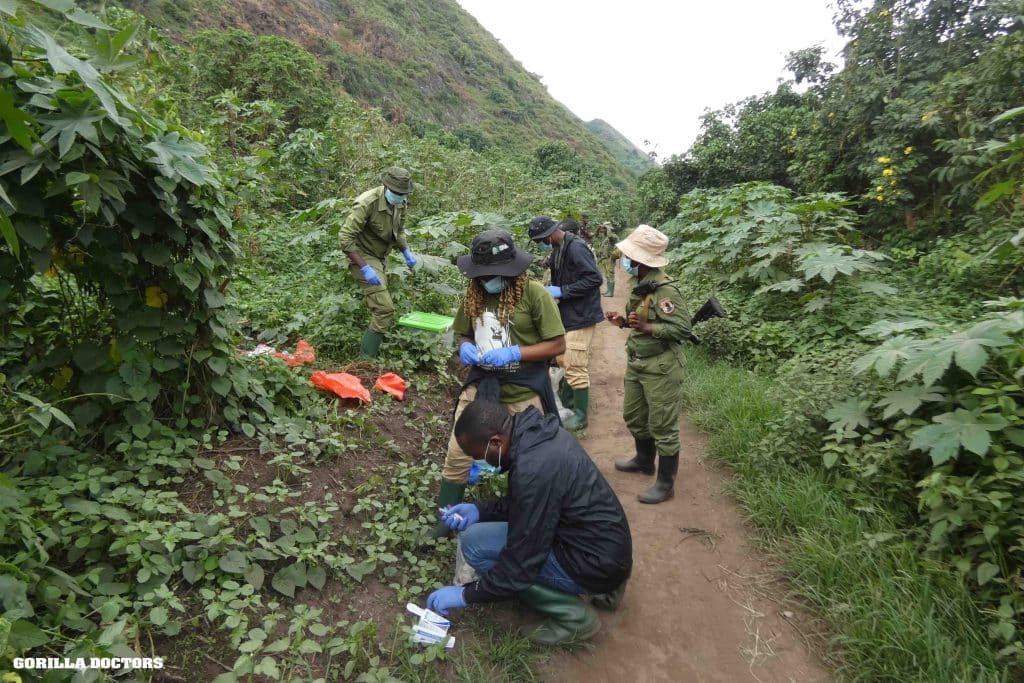
Prepping dart, medication and supplies for the intervention. © Gorilla Doctors
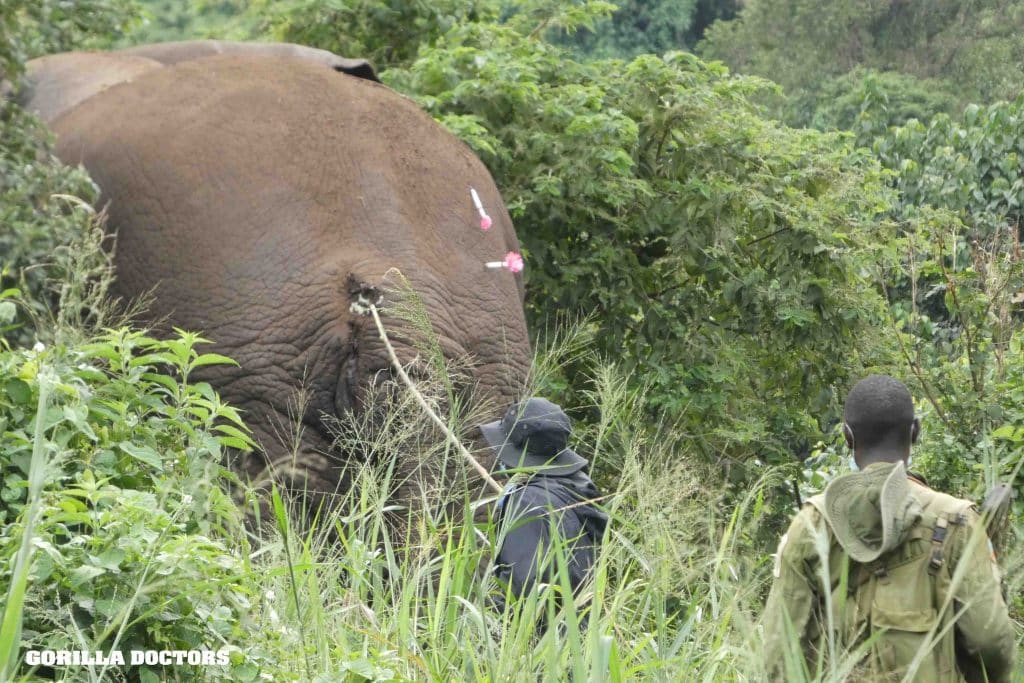
Elephant successfully darted with anesthesia. © Gorilla Doctors
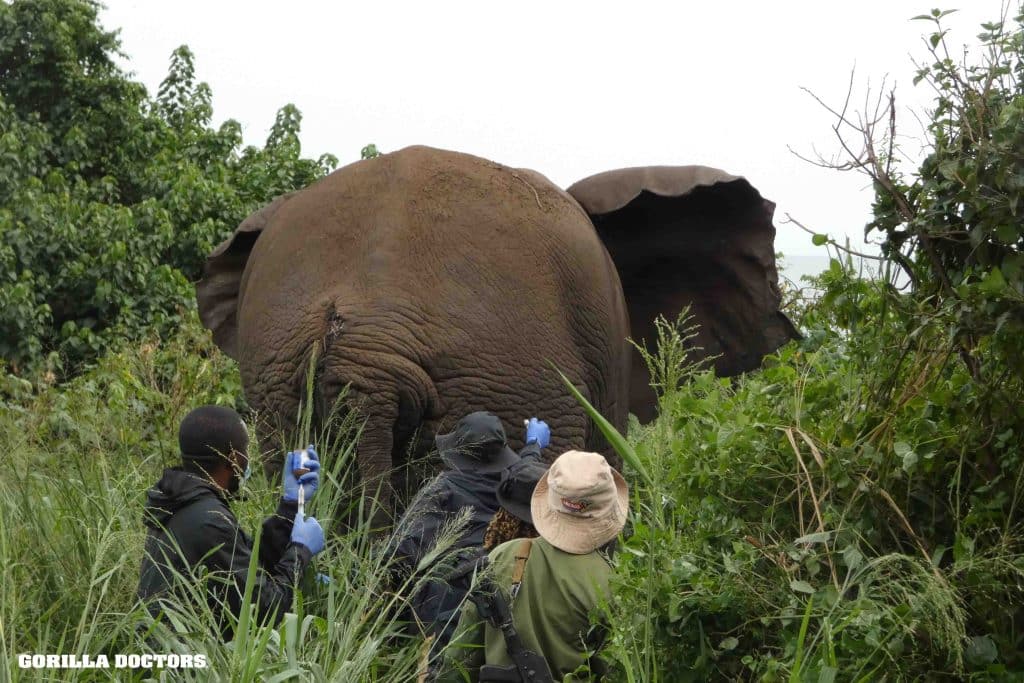
Ready for additional medication! © Gorilla Doctors
He was still sensitive to noise after half an hour, so I gave a second, smaller dose. Twenty minutes later, he was no longer responsive to stimulation. It was time to work.
The wound was moderately deep and infected. Its shape suggested he may have been injured by a bullet or a spear. We cleaned and flushed the wound with diluted antiseptic and applied an antibiotic spray. We also gave him a long-acting antibiotic and an anti-inflammatory for pain and swelling, and took blood samples for testing.

Dr. Fabrice cleans and treats the infected wound. © Gorilla Doctors

Project veterinarian Dr. Isabelle assists Dr. Fabrice. © Gorilla Doctors
Throughout, he stood calm, breathing slowly and deeply. The rhythmic ear flapping seen in the video was a positive sign that the elephant continued using his ears for vascular cooling – protecting himself from hyperthermia (overheating). Around one hour and forty-three minutes after the second dose of anesthesia, we gave the reversal drug and pulled back to watch with the drone. Within seven minutes he was moving his trunk, ears and tail, and then he walked away on his own.
The bull is back in the forest, and the rangers who first found him are keeping a close eye on his recovery. We are waiting on results from his blood samples.
Days like this are possible because of our partnership with Virunga National Park and ICCN (Institut Congolais pour la Conservation de la Nature). The park’s rangers are the eyes and ears of this landscape. They see the injured animal first, they know the terrain, and they make it safe for us to work. This is what conservation looks like in Virunga: a team of many dedicated to the protection, health, and conservation of nature.
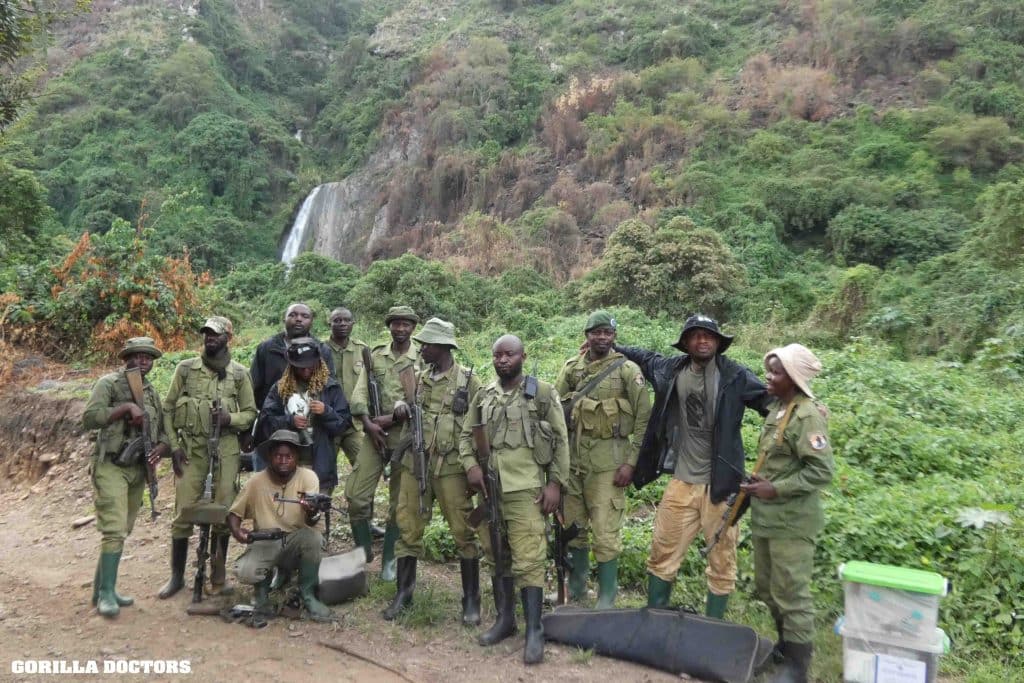
Elephant intervention team! © Gorilla Doctors