During a monitoring visit of Nkuringo group in Bwindi Impenetrable National Park, Uganda, senior field veterinarian, Dr. Fred Nizeyimana, captured this incredible moment as adult female Kwitonda maneuvered across a river with her infant. We sat down with Dr. Fred because we had to know the story behind this image!
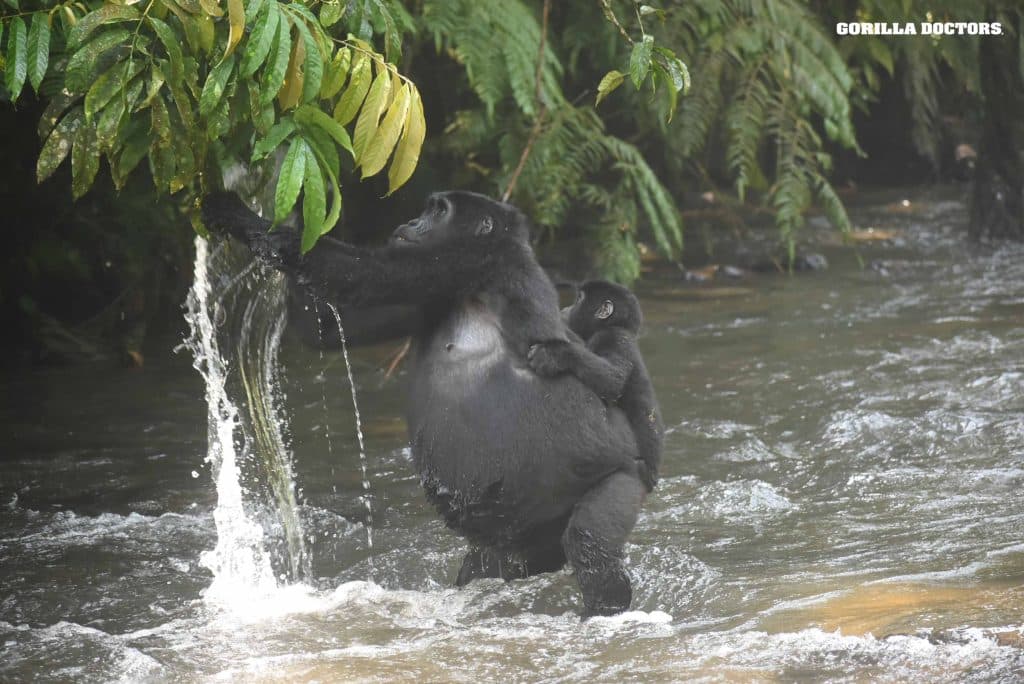
Adult female mountain gorilla with infant crossing the IVI river. © Gorilla Doctors
Q: Fred, this photo is just amazing. First, tell us why you were conducting a monitoring visit of Nkuringo group and how a monitoring visit is different from a routine health check.
Dr. Fred: Four gorillas in Nkuringo group had been reported with facial skin lesions (rash around the mouth and nose) and I had to go for a monitoring visit to the group. A monitoring visit is performed for assessment of reported sick gorillas. A routine health check is performed regularly at least once every month to ascertain the health status of the whole family/group. A routine health check is an important part of ‘One-Health’ because it informs and confirms the status of the group/ health of gorillas that are visited by tourists.
Q: How many mountain gorillas are in Nkuringo group? Did you watch the whole group crossing the river or just Kwitonda and her infant? How old is her infant?
Dr. Fred: There are 14 members in Nkuringo group. Yes, I watched the whole group crossing the river but I curiously got photos of Kwitonda from start to finish and a few others after. The infant of Kwitonda, named MURORE, is two years old (born on 01 March 2024).
Q: Tell us more about what is happening in the photo. What is the name of the river? Is Kwitonda holding the branch for balance? Did she cross entirely on her two hind legs? How long did it take? We need details!
Dr. Fred: Kwitonda wades through the river while stepping on some firm rocks and towards the far end/ bank, she gets hold of a tree branch to maneuver and balance herself (and baby) through the deep waters. The River is called IVI. She crossed using all her four limbs, two at a time! This took over two to five minutes (it involved some calculations and waiting on other gorillas before her).
Q: What did you do after she finished crossing? Did you also cross the river?
Dr. Fred: Yes, and I learned from her as well because I was crossing the river after the group and she showed me a good path. I used the same spot and tree branch to maneuver as well.
Q: Give us a summary of the overall health of the group and the outcome of the individual gorilla you were conducting the monitoring visit of.
Dr. Fred: Kwitonda and her baby were fully healthy at the time of this visit. The four individuals that were being assessed/ monitored have since got clear of the facial lesions.
Q: Anything else you want to tell us?
Dr. Fred: I did two visits to the group to maximize the ‘visual’ assessment and collect stool samples for laboratory analysis to augment our diagnosis.
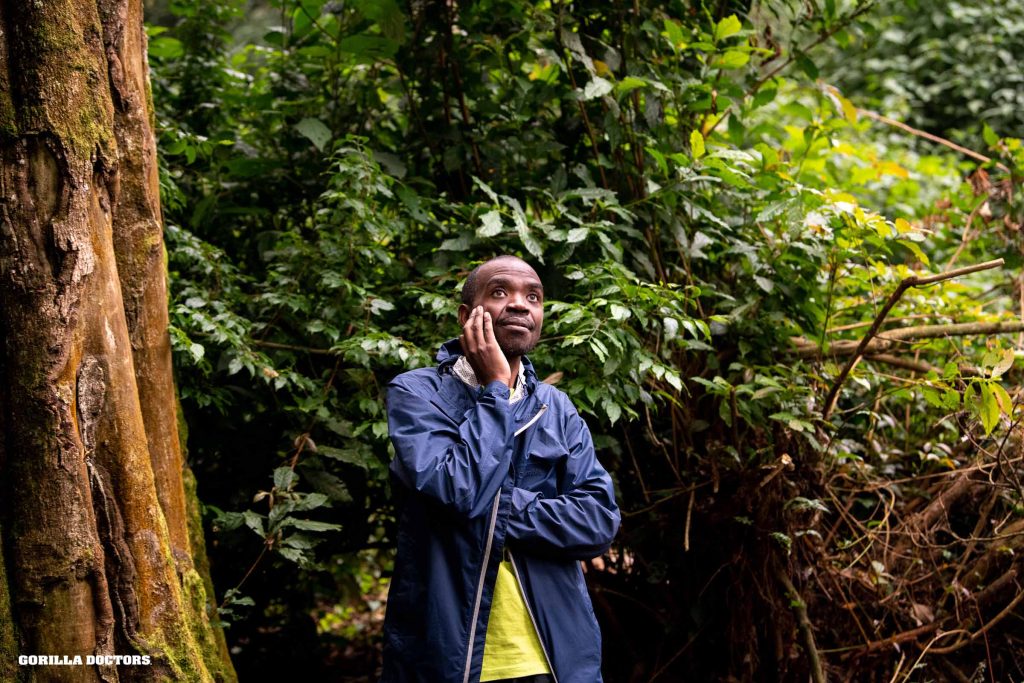
Dr. Fred Nizeyimana, senior field veterinarian, Uganda, having a contemplative moment in Bwindi Impenetrable National Park, Uganda. © Skyler Bishop for Gorilla Doctors