Nora Nickum’s latest book, Wild Medicine: Inventing Ways to Save Endangered Animals, was released today, and Gorilla Doctors is honored to be included alongside a menagerie of endangered animals and the dedicated people working to save them.

The cover of Wild Medicine, courtesy of Tilbury House Publishers.
Our very own Dr. Eddy is featured in chapter two as he travels to Virunga National Park in DR Congo to treat a sick silverback mountain gorilla.
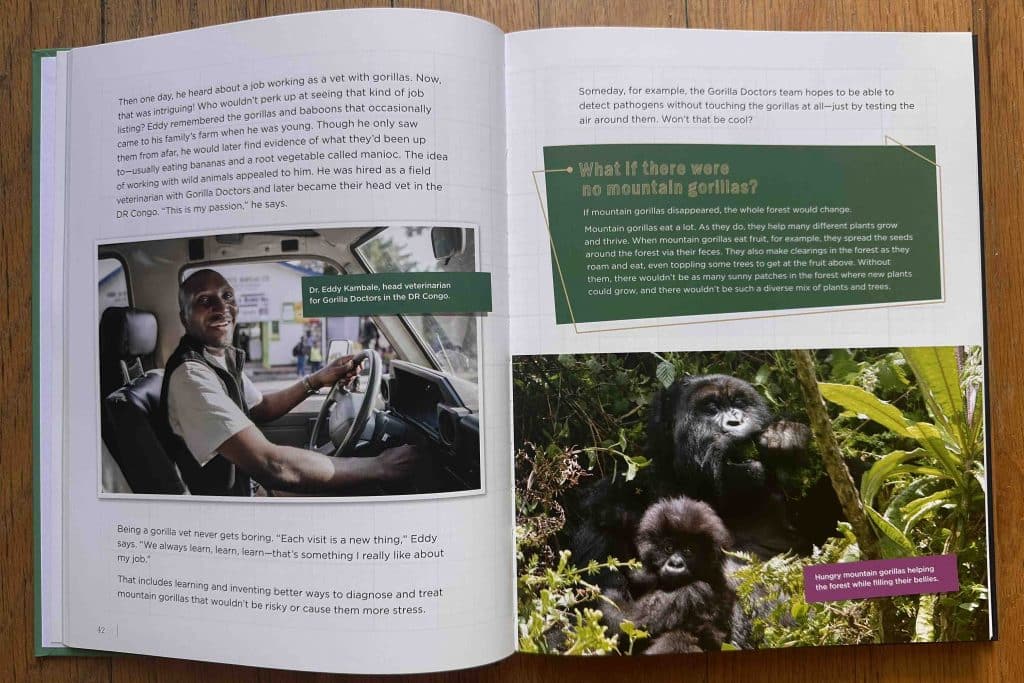
Dr. Eddy Kambale Syaluha, Gorilla Doctors’ head veterinarian in DR Congo featured in Wild Medicine with a wonderful photo by Skyler Bishop.
Despite her busy book launch schedule, we managed to sit down with Nora for a brief conversation, during which she shared her belief in the power of books to ignite and inspire young people to become our next generation of animal lovers and conservation leaders.

Wild Medicine author, Nora Nickum. Photo by Annie Graebner courtesy PNW Bainbridge magazine.
1) Q: Tell us about the book and how you first came up with the idea.
A few years ago, I came across some intriguing articles about people working to save endangered species from disease outbreaks in the wild. Wildlife vets and biologists were shooting peanut butter pellets across the prairie, trekking into the jungles of DR Congo, and hovering over whales with drones to catch breath samples. Fascinating! And I am always drawn to conservation stories, because I work on conservation in my day job at the Seattle Aquarium. I saw the potential for this to be a book filled with engaging stories of both urgency and hope, as well as innovation.
2) Q: Your books are for children and teenagers, why is this audience important to you?
I love engaging kids’ curiosity about the amazing world around us and helping them tap into the power they have to make change. For this book in particular, I thought kids and teens would share my fascination with the problem-solving, experimentation, and creativity needed to figure out how to help endangered animals on remote islands, in mountain jungles, and even on the seafloor. What flavor do you need to make a vaccine pellet to get an Ethiopian wolf or a prairie dog to eat it? How do you get medicine to stick to a coral in the ocean? How do you find a mountain gorilla for a check-up when they are always on the move?
I also enjoy writing for young readers because as they meet the experts profiled in the book, like Dr. Eddy, they may find inspiration for future careers. And there’s a section at the back with lots of ideas for how readers can help endangered species close to home, today. I want to help them feel empowered to act.
3) Q: There is such a wonderful range of animals featured — from sea stars to bats and wolves — and of course, gorillas! How did you choose the animals and organizations or people to include in your book?
I was looking for diverse stories – different geographies, habitats, species (birds, mammals, invertebrates), pathogens (bacteria, viruses, fungi, parasites), and approaches (from oral vaccines to releasing millions of flies!). It was also important to me to ensure all the stories had clear elements of progress and hope, amidst all the challenges.
4) Of course we have to ask, how did you first learn about Gorilla Doctors?
The Gorilla Doctors website came up quickly in my searches for organizations working to address disease risks to endangered animals out in the field. The long history of Gorilla Doctors is remarkable–you are really pioneers in this work! And it was an interesting contrast with other animals in my book, such as stony corals and California condors, where new diseases are an emerging threat and scientists have been hurrying to develop treatments and ways to administer them.
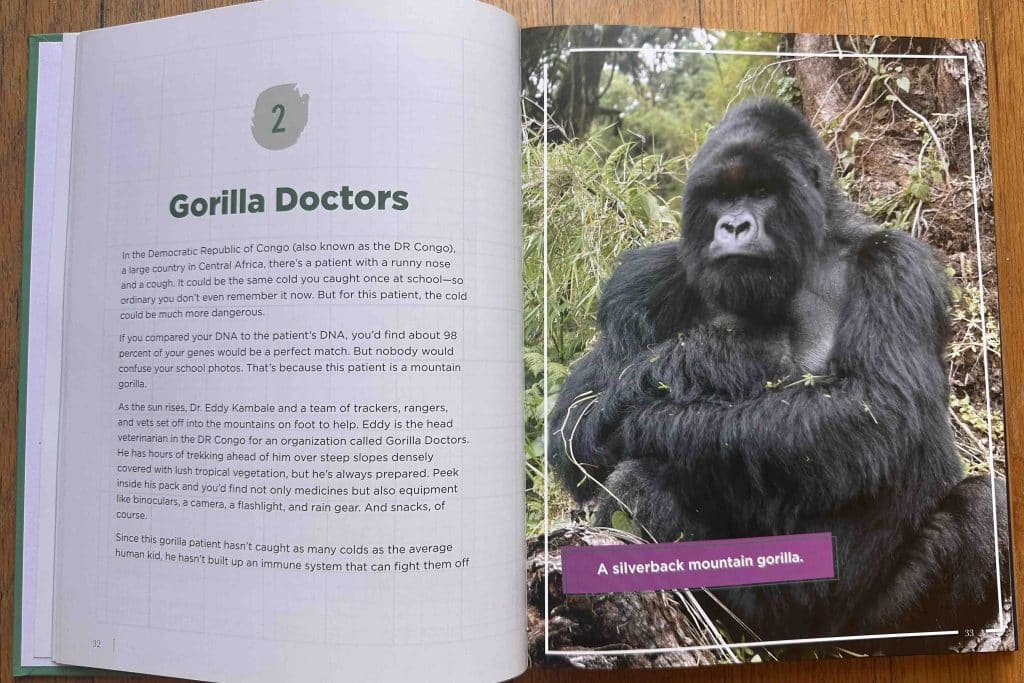
A chapter on Gorilla Doctors in Wild Medicine.
5) Was there anything from your conversation with Dr. Eddy that you loved but that didn’t make it into the book?
I loved hearing Dr. Eddy talk about mountain gorillas’ family bonds. He and the team have such a deep understanding of those intimate relationships from countless observations, and it was fascinating to hear how that knowledge informs their approach to medical treatment. If they’re going to treat a gorilla, it helps to know which other gorillas that one is most connected to, to anticipate how they might all respond to a situation. Dr. Eddy also recalled that one day while he was removing a snare from a juvenile, he watched the mother go hide her smaller baby in the bush. “You just say ‘wow,’” he told me. Dr. Eddy’s stories conveyed how passionate he is about his work–and while it’s hard work, he finds many moments of awe and wonder.
6) Last question, what surprised you most when you were doing all the research and interviews for Wild Medicine?
There’s a factory in Panama that constantly produces sterile screwworm flies; mountain gorilla nose-wrinkles are unique like fingerprints; prairie dogs prefer medicine that tastes like peanut butter; and sea stars seem to have different personalities!
Thank you, Nora! We wish you all the best success with the book and we hope it is enjoyed by many.
Wild Medicine can be purchased at:
Any independent local bookseller can order it for you!