Volcanoes National Park, Rwanda
By Dr. Adrien Emile Ntwari, Field Veterinarian
Recently, Tebuka, a 13-year-old silverback in the Pablo group, sustained severe wounds from an interaction with a lone silverback. A few days later the wounds appeared infected, and he needed hands-on treatment to recover, including suturing one of the deepest wounds on his abdomen. The following is an account of our monitoring, intervention, and post-treatment follow-up visits.
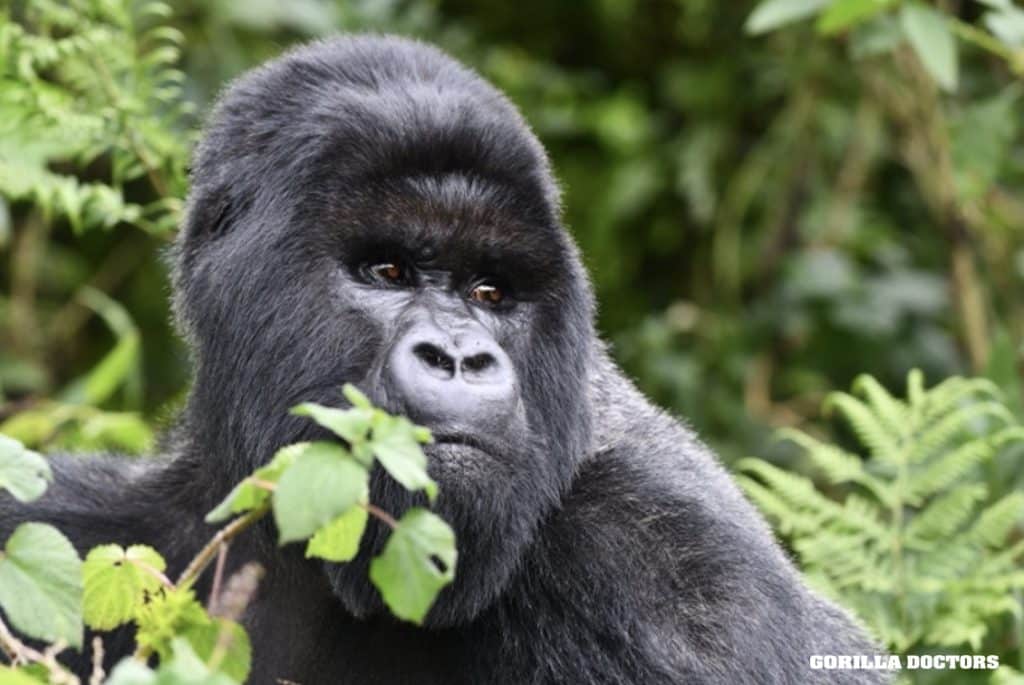
Silverback Tebuka of Pablo group, August 24, 2026. © Gorilla Doctors
Sunday, August 16
The trackers reported an interaction between the Pablo group and an unknown lone silverback around the Bizumu area. Tebuka wasn’t seen with the rest of Pablo group that day.
Tuesday, August 18
Two days later, trackers found Tebuka back with Pablo group. He had multiple wounds and wasn’t using his right arm at all, but he was keeping pace with the group and feeding reasonably well. Since he was still managing on his own, we continued to monitor him rather than intervene right away.
Friday, August 21
Gorilla Doctors received a call that Tebuka was weak, hadn’t eaten all morning, and was lagging behind the group. Dr. Noel and I hiked into the forest and reached Pablo group by 1:40 p.m. Tebuka was resting alone in thick vegetation, about 300 meters from the rest of the group.
On examination, he had multiple wounds across his body. Two were of particular concern: a wound on the left side of his abdomen with pus-like discharge, indicating infection, and a 15-centimeter laceration at his right elbow, with the arm ‘frozen’. Given the appearance of infection and his inability to use his right arm for feeding, we decided to treat the wounds and the associated infections under full anesthesia.
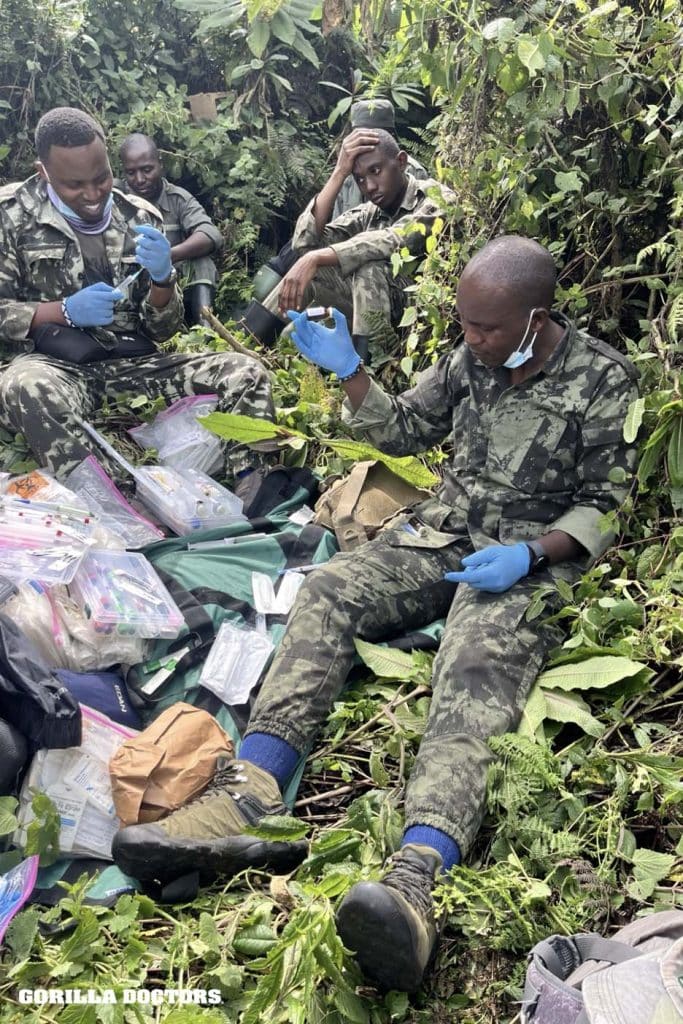
Drs. Adrien and Noel prepare medication, including anesthesia to be administered via dart to silverback Tebuka, August 21, 2026. © Gorilla Doctors
Once anesthetized, we examined him thoroughly. His vital signs — gum color, oxygen saturation, temperature — were all within normal ranges. He had extensive lacerations across his body. Fortunately, the wound in his abdomen, while infected, had not penetrated the abdominal cavity.

Dr. Adrien shaves the area around Tebuka’s wound, August 21, 2026. © Gorilla Doctors
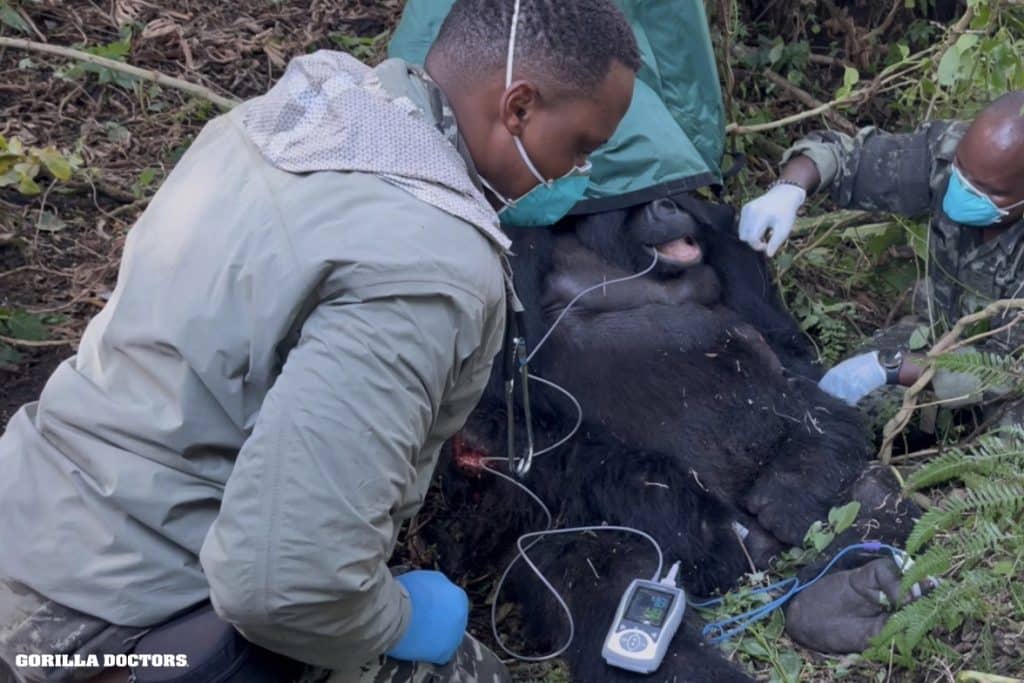
Dr. Adrien prepares to suture Tebuka’s abdominal wound, August 21, 2026. © Gorilla Doctors
We then performed wound care (shaving, cleaning, suturing, and topical antibiotic). Additionally, Tebuka received long acting, broad spectrum antibiotics, pain killers, and vitamins. Tebuka recovered from the anesthesia without complications.
Monday, August 24
Three days later, we returned for a follow-up visit and located Pablo group resting in cool, misty weather.
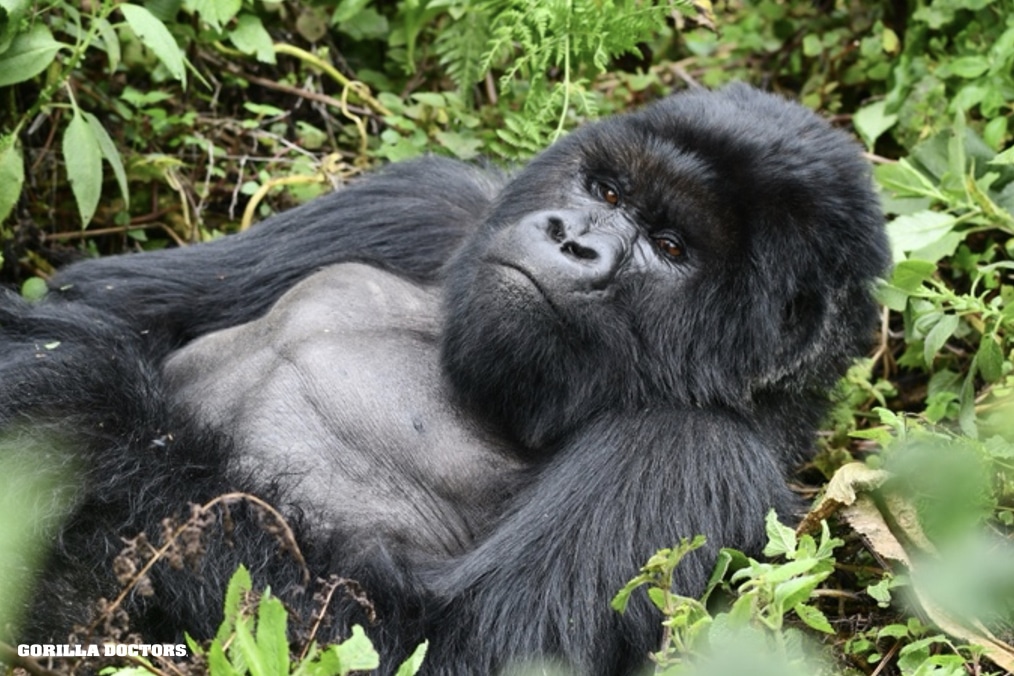
Silverback Tebuka resting, August 24, 2026. © Gorilla Doctors
Tebuka was alert and moving normally with the group. His appetite had improved, though he still wasn’t using his right hand to handle food, adapting to feed one-handed in the meantime. The sutured abdominal wound looked intact, clean, and overall healing well.

Silverback Tebuka only using one arm to feed, August 24, 2026. © Gorilla Doctors
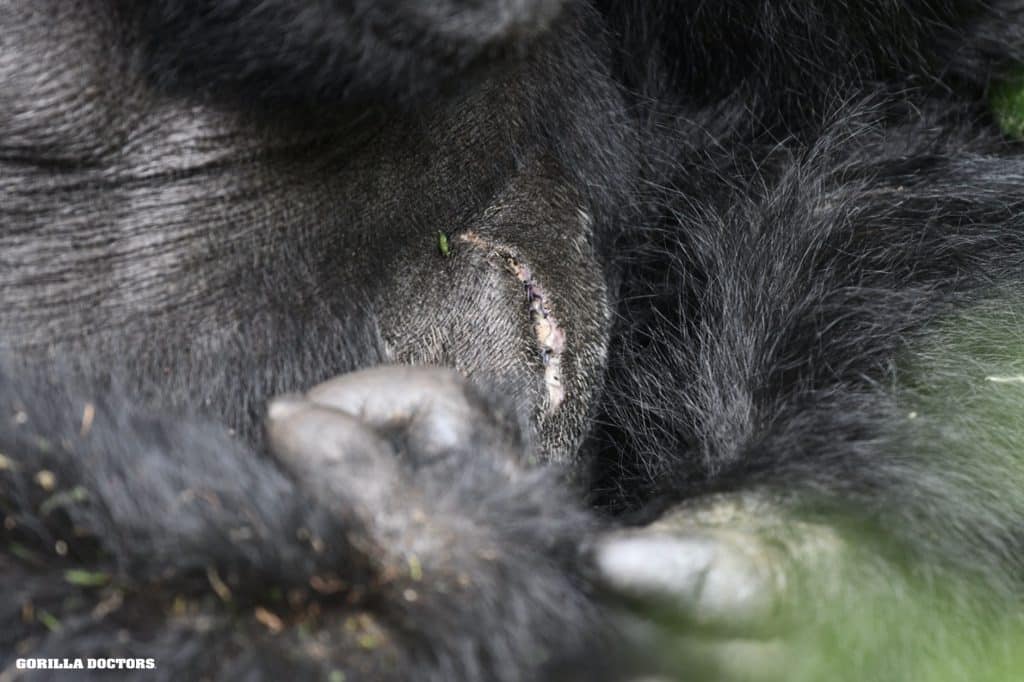
Tebuka’s suture site looking clean and healing, August 24, 2026. © Gorilla Doctors
The elbow wound was still in an earlier stage of healing, and we’ll continue to monitor it closely. Tebuka’s right arm will likely need more time to regain full function, and both wounds will continue to be closely monitored on future visits. As of this check-in, though, he was back with his family, eating, and moving well.