Here we are, Part 3 in our series! In Part 1, we explored Dr. Sonya’s childhood inspirations and education. In Part 2, we learned about the career path that led her to becoming Gorilla Doctors’ next executive director. This week, we look to the future and briefly discuss her vision for the organization and eastern gorilla conservation.
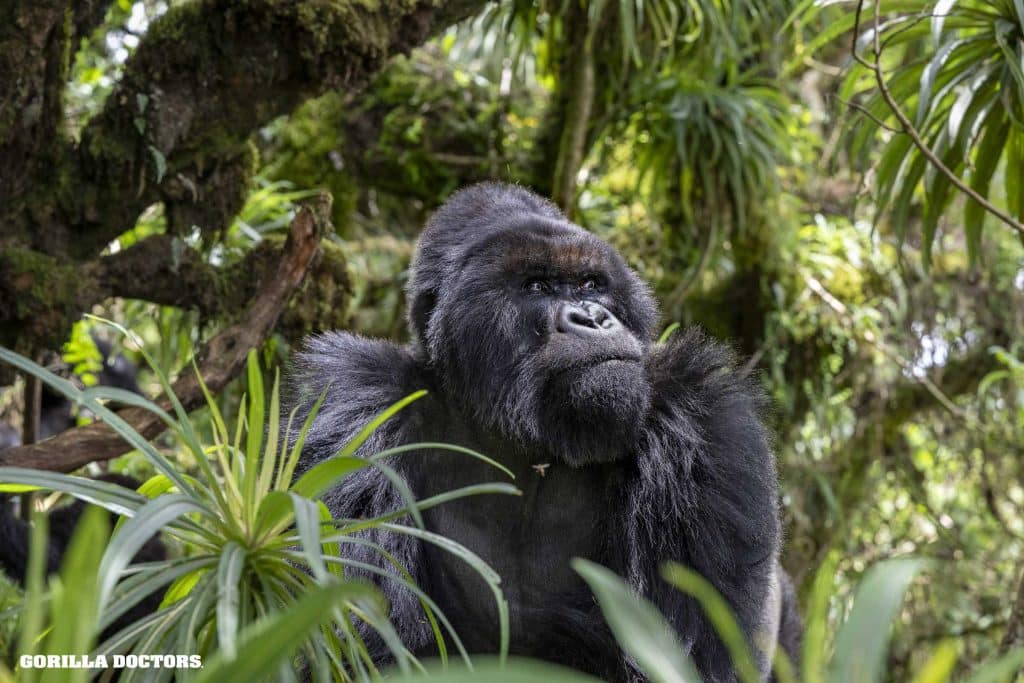
Silverback mountain gorilla, Volcanoes National Park, Rwanda, 2024. © Skyler Bishop for Gorilla Doctors
REMINDER: THURSDAY APRIL 9th
Gorilla Doctors LIVE: Meet + Greet with Dr. Sonya
9:00 AM PDT | 12:00 PM EDT
Join Dr. Sonya and Dr. Jan Ramer, Gorilla Doctors’ Board Chair, as they discuss all things Gorilla Doctors, eastern gorillas, and conservation medicine. They will also take questions from the audience so register today.
1) Why were you interested in the executive director role with Gorilla Doctors?
I’m grateful for the recent opportunities I’ve had working on conservation initiatives in new regions, with different species, and alongside diverse perspectives – experiences that have broadened my understanding and skill set and refreshed my outlook. That said, my heart has always remained rooted in great ape conservation. When the opportunity with Gorilla Doctors arose, it felt like a natural fit, allowing me to return to working with gorillas, reconnect with colleagues, and contribute to an organization with a long, respected history and a reputation for excellence in the field.
2) Gorilla Doctors is a partnership with the Karen C. Drayer Wildlife Health Center at the University of California, Davis School of Veterinary Medicine and our 501(c)(3) nonprofit, Mountain Gorilla Veterinary Project. Having worked in both academia and the nonprofit sector, was there anything about this partnership that especially excited you?
This partnership brings together the best of both worlds – personal relationships with our supporters through the nonprofit and collaboration with the top veterinary school in the country. Our connection with UC Davis began with Dr. Linda Lowenstine who has served as our pathologist since 1986. In 2009, we formalized this relationship with the Wildlife Health Center and became ‘Gorilla Doctors’. Today, the partnership strengthens every aspect of our work. With laboratory and diagnostic support, operational assistance on major international grants, advanced training, and close collaboration with our field teams, it enhances our day-to-day impact while strengthening long-term, sustainable capacity for gorilla veterinary care and conservation in Africa.
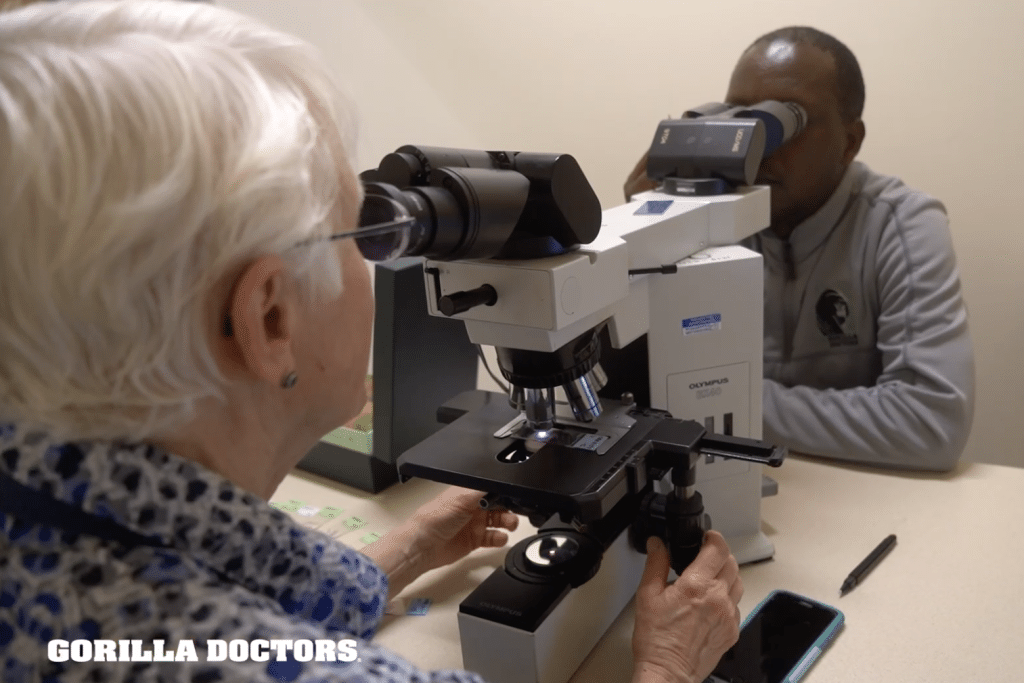
Drs. Linda Lowenstine and Jean Bosco ‘Noel’ Noheri examine histopathology slides at UC Davis, 2024. © Gorilla Doctors
3) Gorilla Doctors has a clear mission and vision. How are you hoping to advance the organization over the next few years?
I believe Gorilla Doctors is very well positioned, with a clear direction and a bold veterinary and science strategy already guiding our work. I’m excited to partner with our board and talented global team to build on our 40 years of successes, while identifying opportunities to grow, innovate, and work even more effectively together. I’m also committed to strengthening our leadership within the conservation community, ensuring we help shape the future of conservation through our One Health approach.
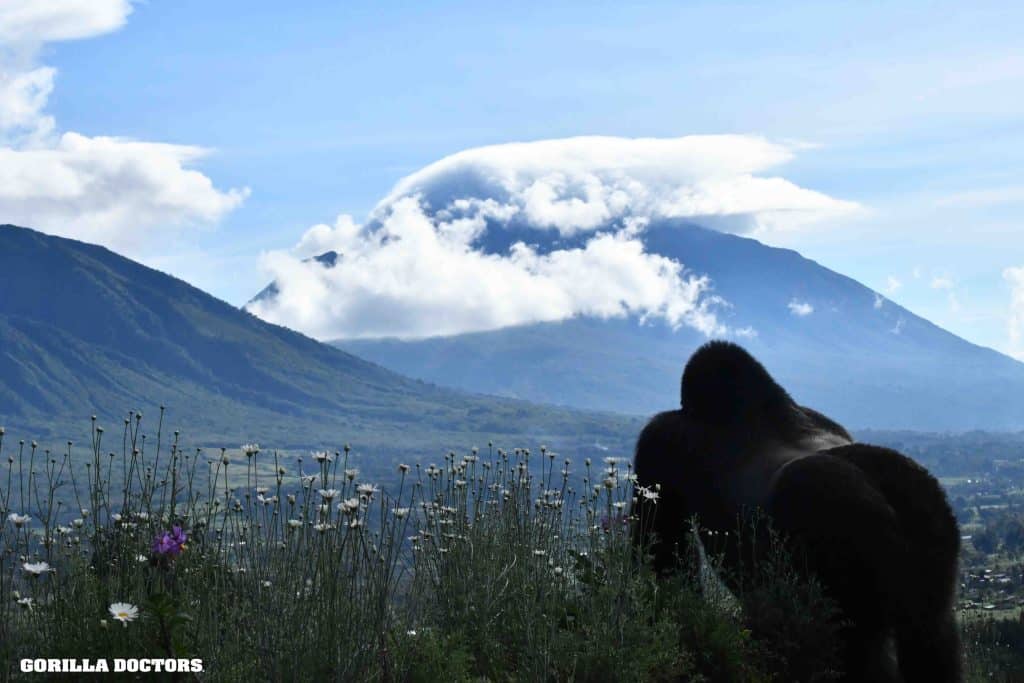
A silverback mountain gorilla surveying the landscape from Volcanoes National Park, Rwanda. © Gorilla Doctors
4) What are some of the biggest challenges you see for eastern gorilla health and conservation?
While conservation efforts – particularly for mountain gorillas – have resulted in remarkable population recoveries, eastern gorillas remain under threat from a complex and interacting set of challenges. Habitat degradation and fragmentation, emerging and human-transmitted diseases, political instability, and the accelerating impacts of climate change all pose significant risks. The coming decade will be critical in determining the future of eastern gorillas.
5) How does Gorilla Doctors fit into the conservation effort?
Gorilla Doctors sits at the center of the needed conservation response. As a slow-reproducing species, every gorilla life saved has a direct impact on the population. The last 40 years of our work has proven this. Gorilla Doctors is the only organization providing life-saving care to wild eastern gorillas across their entire range. Our veterinary teams are first responders to injury and illness, often making the difference between life and death, particularly for key breeding adults.

Drs. Eddy and Fabrice remove a snare from an infant mountain gorilla in Virunga National Park, DR Congo, 2025. © Gorilla Doctors
Beyond emergency interventions, our frontline work, combined with advanced diagnostics and research, positions Gorilla Doctors as a vital early warning system. By continuously monitoring gorilla health, we detect and respond quickly to emerging threats, including diseases that can spread between humans and gorillas. Our research also tracks diseases with pandemic potential, protecting global human and wildlife health, while guiding strategies that are essential to securing the long-term survival of eastern gorillas. We also coordinate with partners across the landscape to ensure a unified conservation approach.
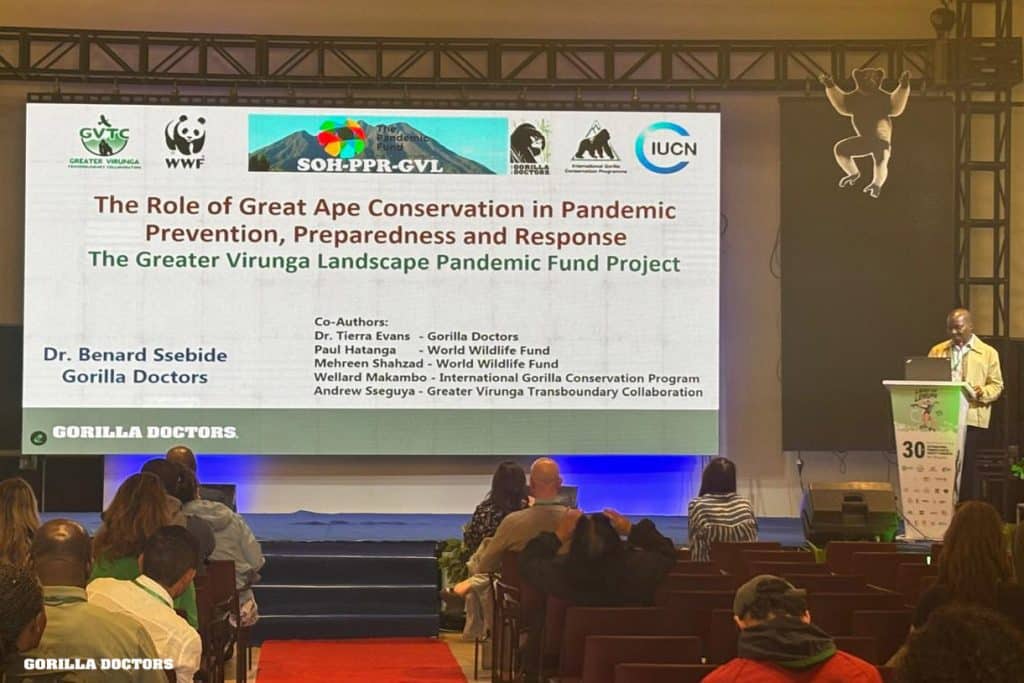
Dr. Benard presents at the International Primatological Society Congress, 2025. © Gorilla Doctors
6) Is there anything else you’d like the Gorilla Doctors community to know before they come and ‘meet’ you on Zoom next week?
I’d like to say a big thank you for your commitment to Gorilla Doctors’ work! Whether you’re engaging with our stories online or supporting through donations, you help make this vital work possible. Over the past month, it has been truly inspiring to learn about and meet the many individuals – staff, board members, and long-time supporters – who have dedicated decades of their life to Gorilla Doctors’ mission. It is clear that this is a special community. As Executive Director, I look forward to getting to know you as we build a future where gorillas, people, and our shared planet thrive together.
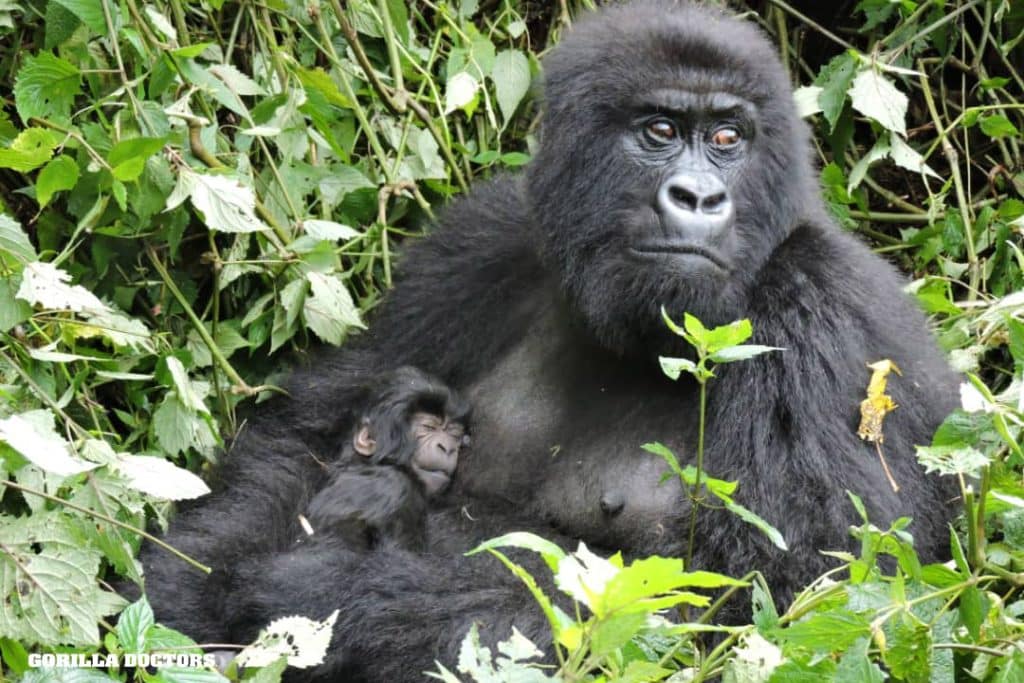
Adult female mountain gorilla with newborn, Virunga National Park, DR Congo, 2020. © Gorilla Doctors