By Gaspard Nzayisenga, senior field veterinarian
Volcanoes National Park, Rwanda
December 25, 2025 saw the beginnings of respiratory illness in some of the gorillas in Kwitonda group. Over the next few days, the respiratory illness spread through the group with some gorillas showing more severe clinical signs than others.
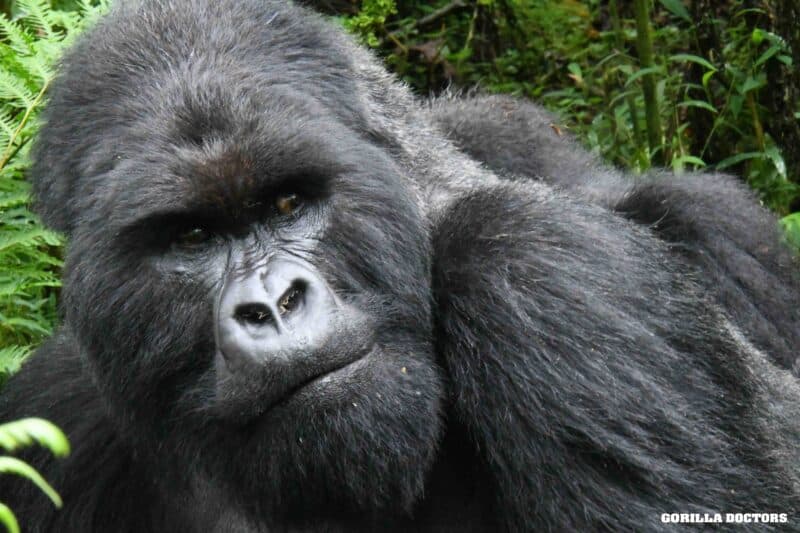
Silverback Karevuro showing clinical signs of respiratory illness, December 28, 2025. © Gorilla Doctors
On December 28, trackers reported to Gorilla Doctors that silverback Karevuro was lethargic and lagging behind the group, not rising from his night nest until 9:30am that morning. He had been experiencing a mild cough since Christmas Day but nothing that impacted his activity levels.
Karevuro has a known history of recurrent respiratory infections, often requiring medical intervention for recovery. His most recent treatment occurred in March 2025, during a group-wide respiratory outbreak confirmed to be caused by Human Metapneumovirus.

Silverback Karevuro received treatment for respiratory treatment in March 2025. © Gorilla Doctors
The next morning, trackers quickly realized that Karevuro was not with his group, which had moved nearly 300 meters away to feed. They found Karevuro still in his night nest. While we mobilized to the park for an assessment and possible intervention, Karevuro left his nest, feeding briefly but not joining his group. We arrived around 10:45am to observe Karevuro having moved only a short distance with signs of lethargy, nasal discharge, mild cough, and minimal feeding.
After discussion with the team, we made a clinical decision to provide supportive treatment to Karevuro providing antibiotics and anti-inflammatories via remote injection. We successfully delivered the medication with two separate darts into his back shoulder muscles.

Preparing medication to administer to Kareruvo via dart. © Gorilla Doctors
Following Karevuro’s successful intervention we continued to monitor the respiratory illness outbreak daily. By January 6, the respiratory infection was affecting all but three gorillas in the group (16 of 19) while silverback Karibu was not observed during the monitoring period. His health status remained undetermined as of January 6. Among the affected individuals, the infant Ntarungu (offspring of adult female Gahuza) appeared to be the most severely impacted by the outbreak.
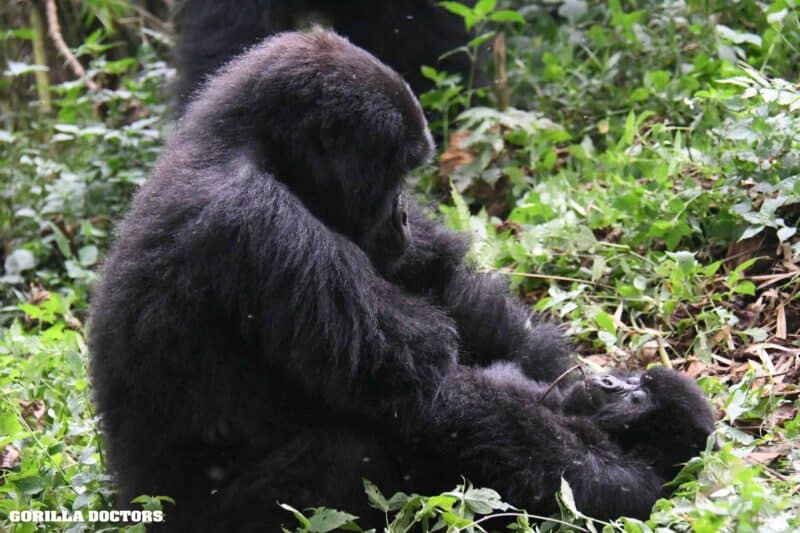
Adult female Gahuza and her infant, Ntarungu, January 6, 2026. © Gorilla Doctors
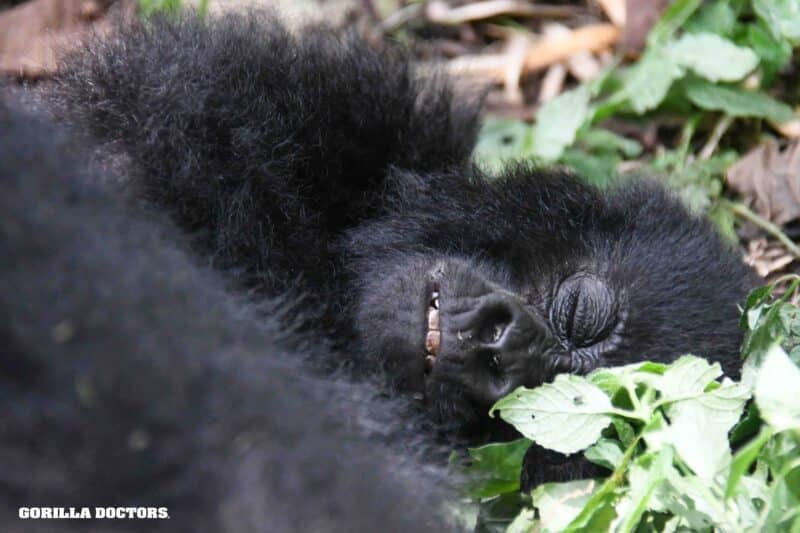
Infant Ntarungu showing clinical signs of respiratory illness. © Gorilla Doctors
Following several hours of direct observation and the severity of the clinical signs, the team decided to provide more hands-on care and proceeded to successfully anesthetize both Ntarungu and Gahuza. Our intervention was complicated by the multiple silverbacks in the group repeatedly charging in an attempt to protect the infant, but the intervention team managed to safely keep them at bay while we worked. We chose to forgo overall physical exams so we could reverse the anesthesia and return the mother and infant to the group as quickly as possible. Both gorillas recovered well from anesthesia.
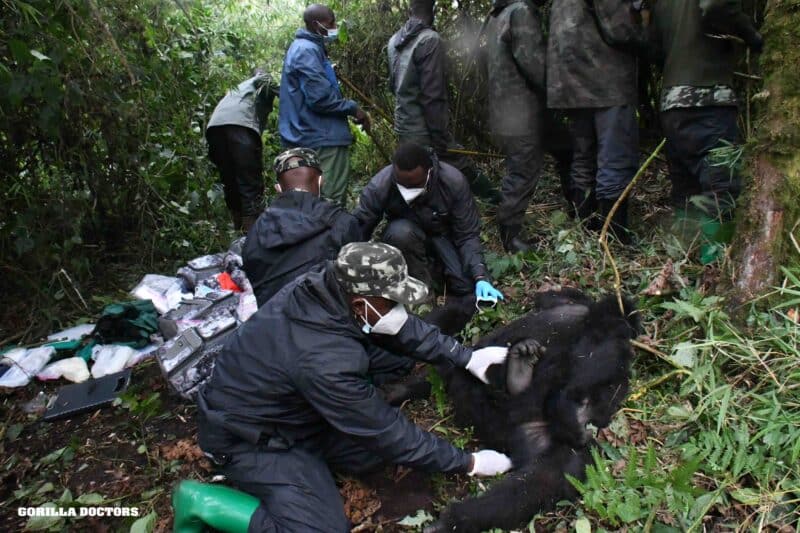
Treating Gahuza and Ntarungu, January 6, 2026. © Gorilla Doctors
Monitoring the next day found both gorillas showing signs of recovery although Ntarungu still had significant nasal discharge. Fortunately, we observed him breastfeeding, so it did not seem to impact his ability to feed.
By January 9, Ntarungu and Gahuza were both looking good and Ntarungu’s nose was clear.

Ntarungu’s nose clear of discharge, January 9, 2026. © Gorilla Doctors
We were encouraged to see silverback Karevuro also showing signs of recovery: feeding and occasionally displaying while the rest of the group was resting.
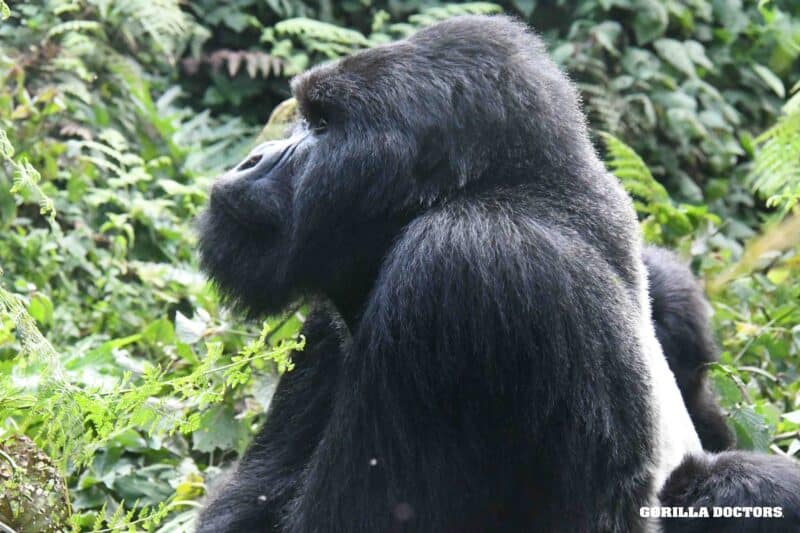
Silverback Kareruvo fully recovered, January 9, 2026. © Gorilla Doctors
Two new gorillas were showing signs of illness, and two other gorillas were missing from the group. Close daily monitoring continued along with a search of the surrounding area for the two absent gorillas. Fortunately, both silverbacks Cyusa and Karibu (brothers from the same mother) reappeared with the group on January 12 and appeared to be in good visual health. The occasional disappearance of silverbacks in multimale groups is not entirely uncommon and may be due to reasons unrelated to respiratory illness.
We will provide updates until the respiratory illness outbreak is fully resolved.