
UPDATE: Tulambule’s Ongoing Treatment – March 12 >>
As we first reported, Dr. Fred administered a first dose of deworming medication on January 26. On March 12, Dr. Nelson administered a second dose of deworming treatment. He reported that Tulambule still exhibits mild clinical signs of gastrointestinal parasites – brownish and thinning haircoat – but is showing improvement in other areas. Fortunately, Tulambule is feeding and active as is her six-month-old infant. Visual monitoring continues and a third dose of deworming treatment will be administered in approximately two weeks.
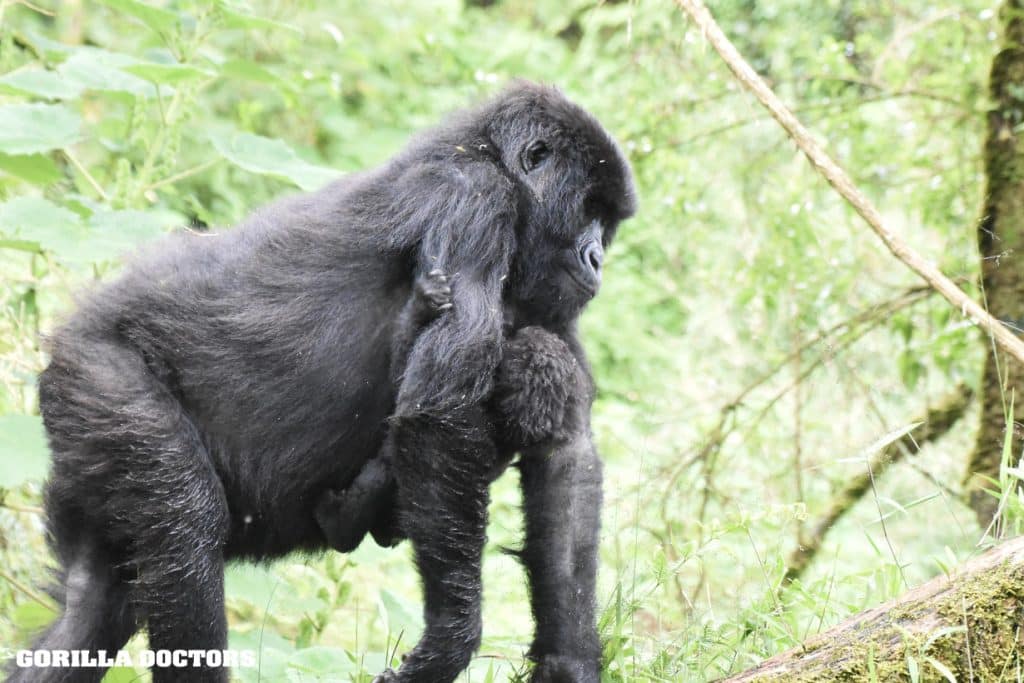
Tulambule on March 12 with mild clinical signs of gastrointestinal parasite illness. © Gorilla Doctors
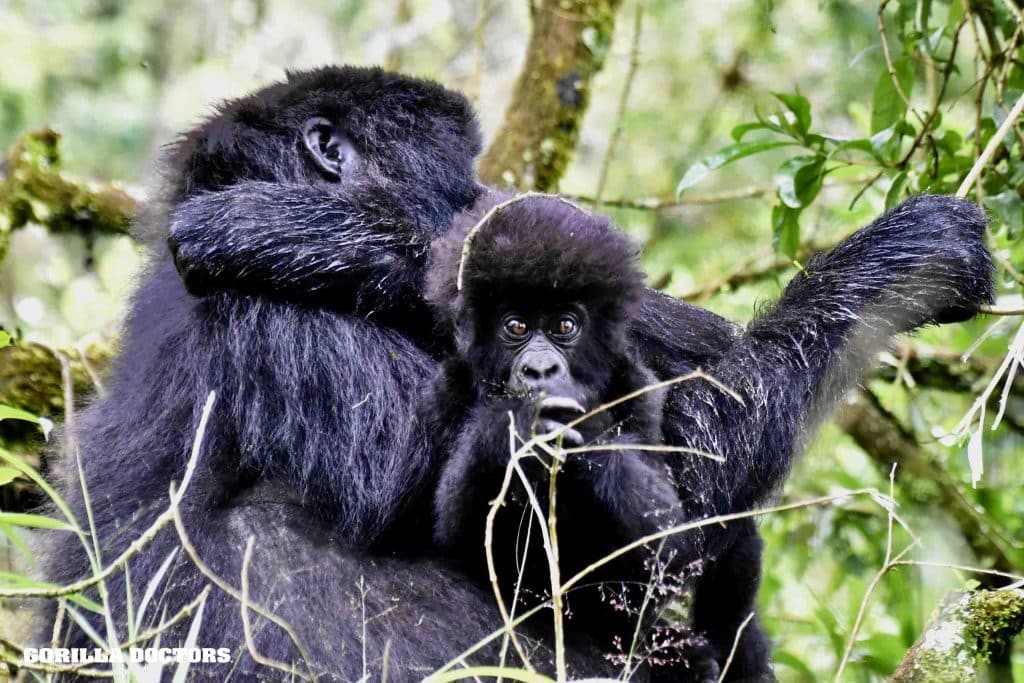
Tulambule’s curious and playful infant on March 12. © Gorilla Doctors
ORIGINAL STORY FROM FEBRUARY 4, 2026 >>
By Dr. Fred Nizeyimana, senior field veterinarian, Uganda
On January 19, I received a call from Mgahinga Gorilla National Park trackers that adult female mountain gorilla, Tulambule, in Nyakagezi group, had diarrhea and appeared slightly emaciated. As I was working from the Buhoma sector of Bwindi Impenetrable National Park, a roughly five-hour drive away, I mobilized my field equipment and drove to Mgahinga in the next few days.

From the archives: Dr. Fred driving through Bwindi Impenetrable National Park, Uganda, 2018. © Skyler Bishop for Gorilla Doctors
From Snare Rescue to Motherhood: Tulambule’s Story
Our dear followers, you first met Tulambule as a juvenile in 2019 when Dr. Ricky rescued her from a snare after a grueling, 10-hour day that involved a buffalo attack and the lead silverback, Mark, running off with an anesthetized Tulambule! You can read that story HERE.

As an infant in 2019, Tulambule was rescued from a wire snare around her right wrist. © Gorilla Doctors
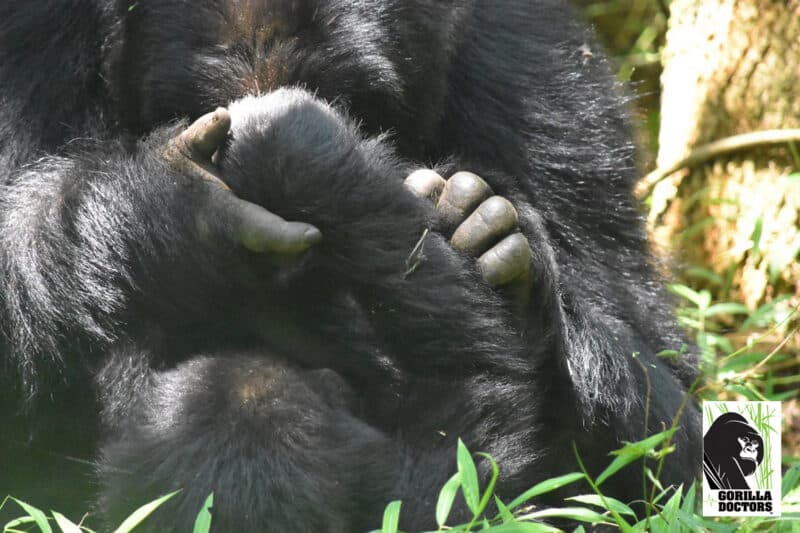
Tulambule’s mother ‘inspecting’ the wire snare, 2019. © Gorilla Doctors
Today, now nine-years-old Tulambule is the youngest mother in Nyakegezi group. She gave birth in September 2025. This is ‘saving a species, one gorilla at a time’ in action. Rescuing Tulambule from the snare allowed her to grow up healthy in the wild with her gorilla family. Gorilla females only give birth four to six times during their reproductive span, so every gorilla life is essential to the long-term survival of the species.
Keeping Adult Tulambule Healthy
When I arrived on January 26 to conduct a visual assessment of Tulambule, I found her with her infant resting near lead silverback, Mark. She had clinical signs of a heavy gastrointestinal parasite load – diarrhea, brownish haircoat, emaciation, and hair thinning on her shoulders. Fortunately, she was feeding normally.
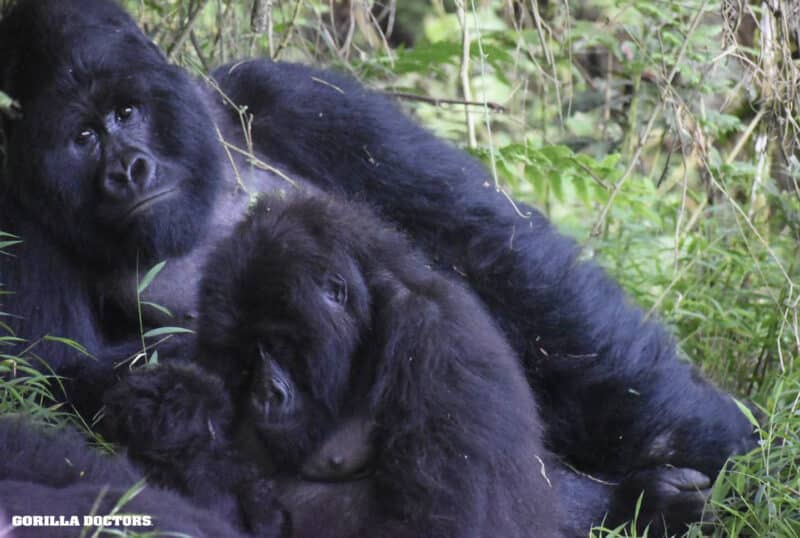
Tulambule with her infant and silverback, January 26, 2026. © Gorilla Doctors
After discussing with our park partners, we decided to provide supportive care. I prepped antibiotics, deworming medication, and vitamins, successfully administering the medication remotely via darting. Silverback Mark was agitated by the sound of the dart gun and attempted to charge us but quickly calmed down again.
Close daily monitoring will continue by the gorilla trackers team, and we will conduct a follow-up visit to assess her condition again and administer a second dose of deworming medication in two weeks.


