A report from Kahuzi Biega National Park, DR Congo
On June 11-12, Gorilla Doctors’ DR Congo team expanded our ongoing Ebola response from Virunga National Park to Kahuzi Biega National Park in South Kivu province, DR Congo — a critical intervention given the multiple threats facing this area. The park and adjacent Oku community forest is home to roughly 60% of the global population of critically endangered Grauer’s gorillas; suspected human Ebola cases have been reported in a nearby territory; and insecurity in the region increases risks to protected areas and the communities that surround them.

The expansion of our activities to Kahuzi Biega is part of a coordinated Ebola prevention and preparedness response effort to protect gorilla parks. At the request of park leadership, we led a training workshop bringing together a diverse set of participants. More than 30 park rangers, anti-poaching teams, tourism staff, researchers, and community health workers received training to:
1) Raise awareness on the risks of Ebola disease to both people and gorillas,
2) Reinforce health safety behaviors to reduce the risk of infection, and
3) Distribute essential supplies to help minimize disease transmission for both people and gorillas.

Workshop leaders and participants, June 12, 2026. © Gorilla Doctors
Why this Outbreak is Different
As we have been communicating, this current human Ebola disease outbreak is caused by the Bundibugyo virus. Unlike the Ebola virus, the Bundibugyo virus has no specific vaccine or therapeutics for treating the disease. With humans and gorillas sharing 98% of their DNA, we have every reason to believe mountain and Grauer’s gorillas are susceptible to the disease caused by the Bundibugyo virus. We also know that in some past Ebola outbreaks in West Africa, western lowland gorilla and chimpanzee populations have been decimated.
Several factors have contributed to the rapidly growing human Ebola outbreak in eastern DR Congo, including civil conflict, high movement of people, lack of testing, reduced international funding, a weakened public health sector, and significant community mistrust and fear.
When it comes to keeping gorillas healthy, prevention and preparedness are the primary lines of defense in creating a ‘ring of protection’ around gorilla protected areas.
One Health + Hygiene Kits as Conservation Tools
The workshop was organized around Gorilla Doctors’ central tenet of One Health. One Health treats human, animal, and environmental health as a single interconnected system rather than three separate issues. Keeping the people who work in the parks healthy is critical to gorilla health – that’s where Dr. Jean-Paul, Gorilla Doctors’ Employee Health Program Manager, comes in. Dr. Jean-Paul leads health education workshops throughout the year and works with park leadership and community health leaders to provide annual physical exams, pathogen screening, and access to health care for park personnel and their families.
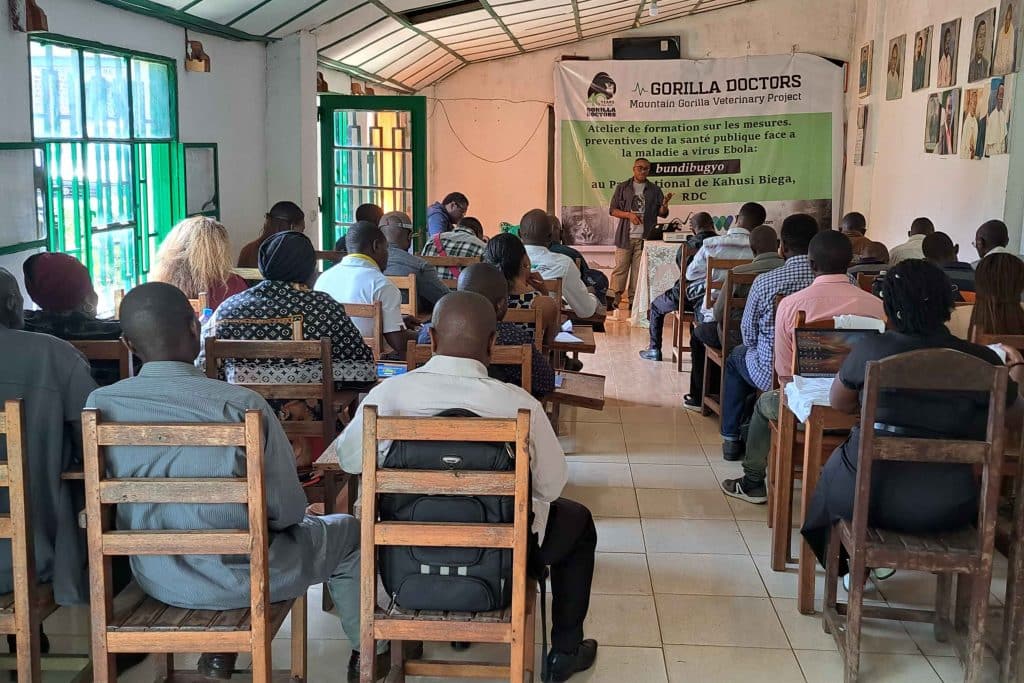
Dr. Jean-Paul presenting. Photo © Kahuzi Biega National Park, shared with permission.
For this workshop, Dr. Jean-Paul first presented in-depth educational materials to the group focused on the following topics:
1) Understanding the One Health approach and how to implement it on the ground,
2) An overview of emerging infectious diseases in eastern DR Congo, including Ebola, (Gorilla Doctors has also been educating on the risk of transmission of Mpox and Anthrax for the past few years), and
3) Preventative measures to reduce the risk of Ebola disease transmission.

Drs. Lina and Jean-Paul demonstrating proper PPE. © Gorilla Doctors
The workshop also included hands-on demonstrations from Dr. Lina, one of our field veterinarians in DR Congo, and workshop attendees practiced with personal protective equipment (PPE) as well as breakout groups working through real-world scenarios they may encounter in the park.
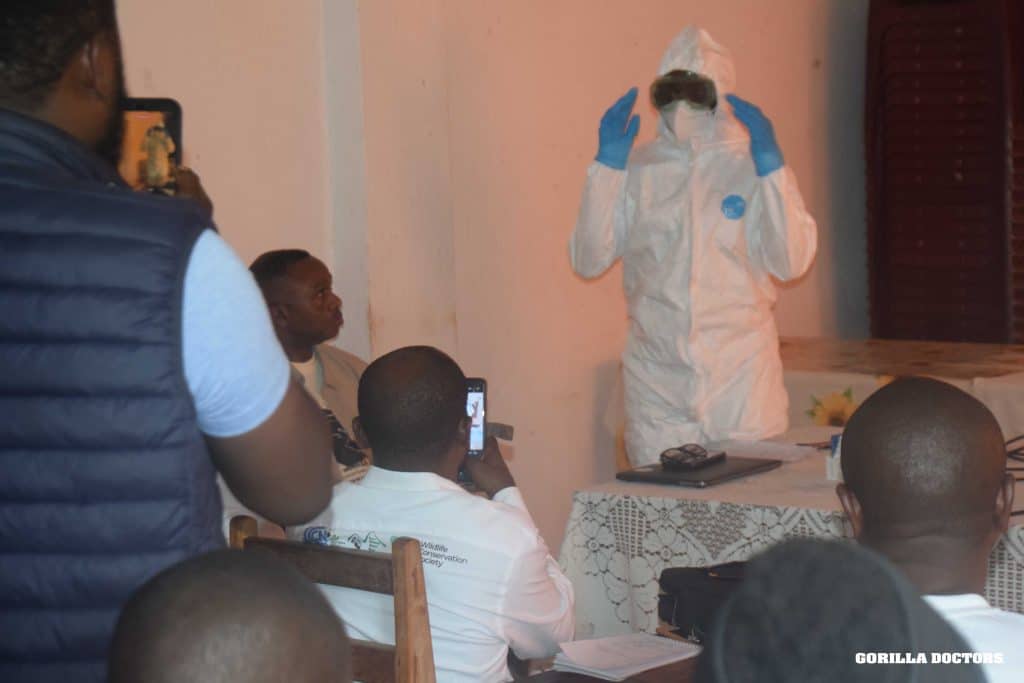
Dr. Lina demonstrates proper PPE for participants. © Gorilla Doctors
Finally, Gorilla Doctors provided the park with the critical supplies needed to implement the preventative measures. Supplies included hand sanitizer, face masks, gloves, goggles, chlorine, spray pumps, hand-washing stations, thermometers, batteries, bullhorns for addressing the public, and full PPE kits.
Why chlorine? Studies have shown that in hand-washing, a combination of chlorine diluted in water and soap are effective in killing viruses and reducing the risk of infection and transmission(1).
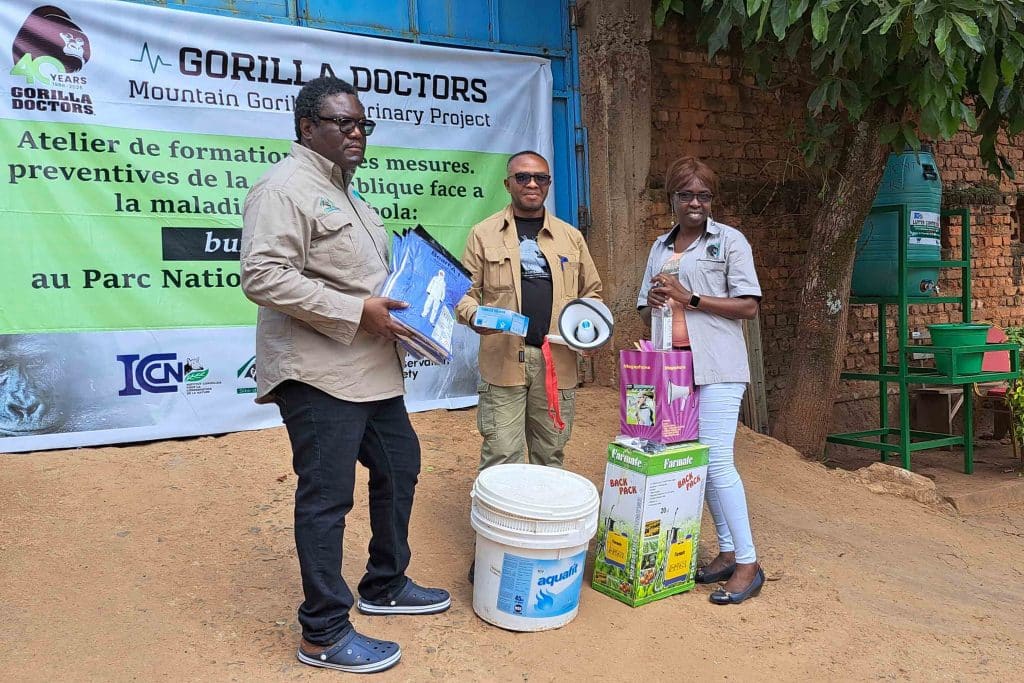
Drs. Jean-Paul and Lina providing supplies to park site director, Arthur Kalonji Mulamayi. Photo © Kahuzi Biega National Park, shared with permission.
Leadership that Predates the Outbreak
In his opening remarks, park site director Arthur Kalonji Mulamayi recognized Gorilla Doctors as a regional pioneer of the One Health approach. The trust enabling the park’s rapid response in the current Ebola outbreak wasn’t built in the weeks since the outbreak was declared but rather was built over years of sustained presence and a daily commitment to the health of gorillas and people.
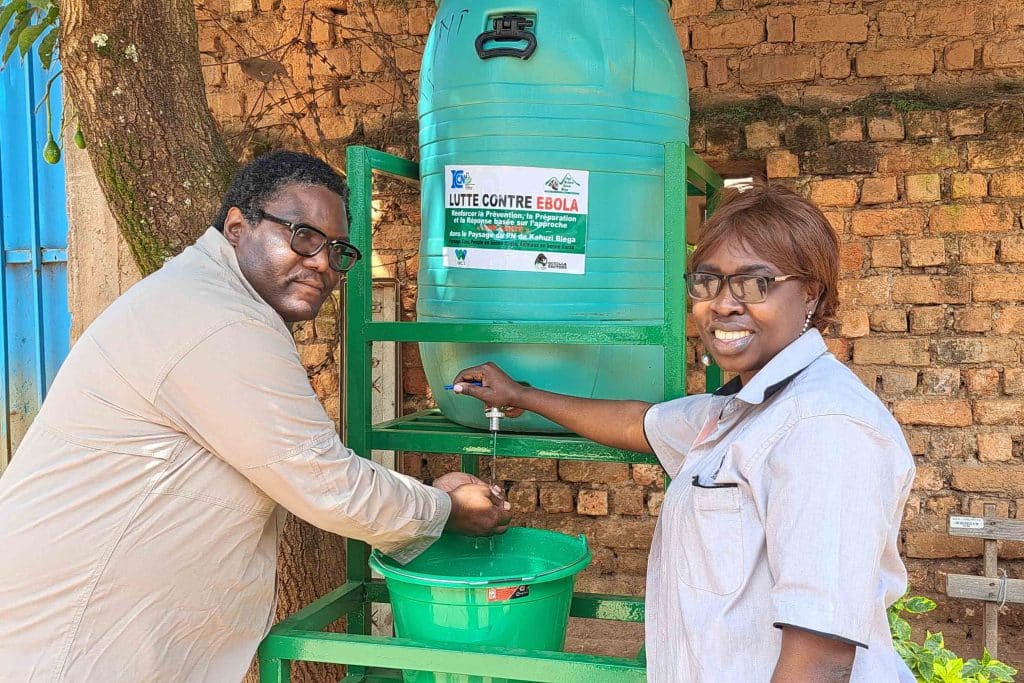
Dr. Lina and Arthur Kalonji Mulamayi using hand-washing station. Photo © Kahuzi Biega National Park, shared with permission.
We are very grateful to Wildlife Conservation Society (WCS) and Kahuzi Biega National Park leadership for helping to organize the workshop and for their years of partnership with Gorilla Doctors. Thanks also to the anonymous individual for providing funding for the supplies.
References
(1)Wolfe, Marlene K., et al. “Handwashing and Ebola virus disease outbreaks: a randomized comparison of soap, hand sanitizer, and 0.05% chlorine solutions on the inactivation and removal of model organisms Phi6 and E. coli from hands and persistence in rinse water.” PloS one 12.2 (2017): e0172734.