Our Hospital is the Forest
Keeping Gorillas Healthy

Routine Health Checks
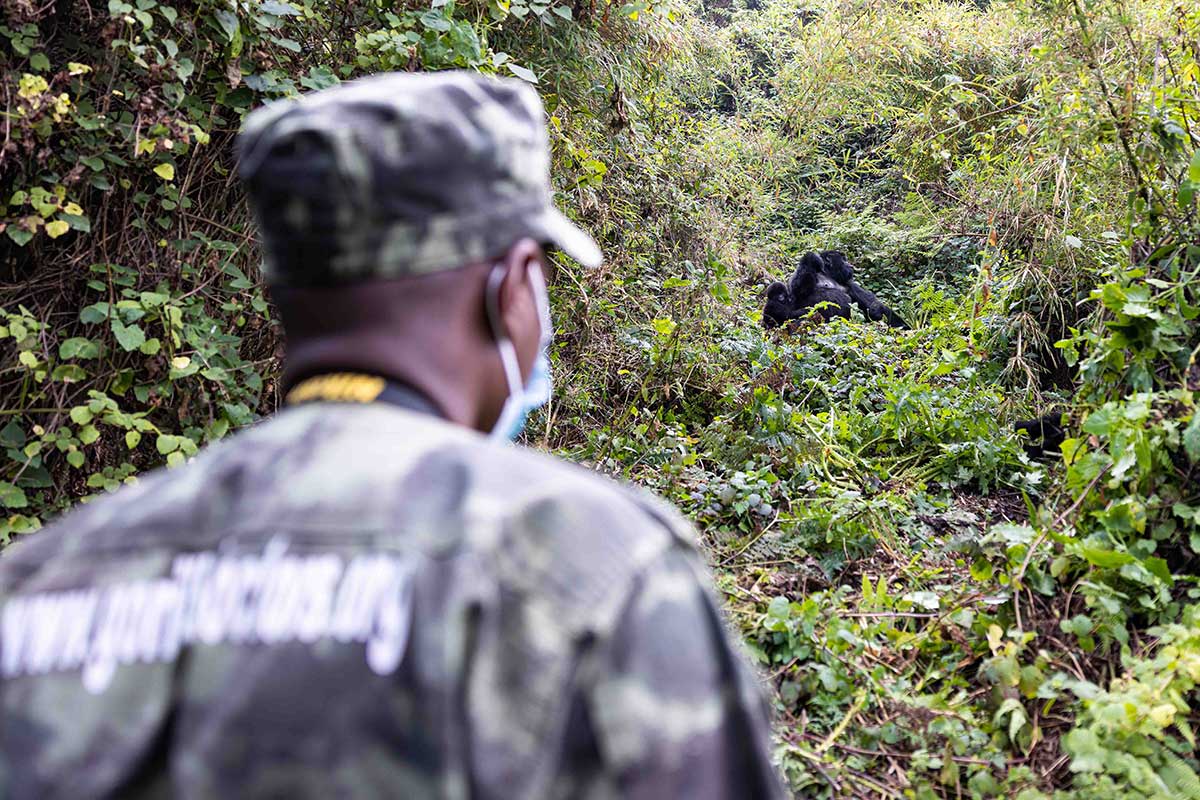
We regularly visit gorilla groups to conduct visual assessments of each individual. We maintain a minimum distance of 10 meters (32 feet) and wear masks. We often use the zoom lens on our cameras to get a closer look.
We record a variety of health parameters during a routine health check:
- Body condition: Does the gorilla look like it is foraging adequately and of expected size for its age?
- Activity: Is the gorilla alert and engaging in normal behaviors? Or is it weak and lethargic?
- Respiration: Is the gorilla breathing well? Is it coughing or sneezing?
- Skin and Hair: Is the haircoat full and shiny or dull, discolored, and falling out? Are there any visible wounds, skin lesions or unusual growths?
- Head/Face: Does the gorilla have a runny nose or eye discharge?
- Stool: Does the gorilla’s stool (feces) look normal in color and consistency?
If weather or dense vegetation prevent us from observing all individuals during a routine health check, we will return another day until all individuals have been visually assessed.
Veterinary Monitoring Visits
Veterinary Monitoring Visits are conducted when we receive a report from trackers of a potential illness or injury, or to monitor a patient’s recovery. We trek into the forest to assess clinical signs and the overall condition of the patient. If the gorilla’s illness or injury is not life-threatening, we continue regular monitoring visits to keep a close watch on its condition.
If its condition deteriorates and becomes life-threatening we perform an intervention.
Clinical Interventions
In partnership with our park partners, if a gorilla’s illness or injury is potentially human-induced or life-threatening, we may decide to intervene and provide medical treatment.
We perform two types of clinical interventions:
- Partial Intervention: medications are delivered to the gorilla patient via dart
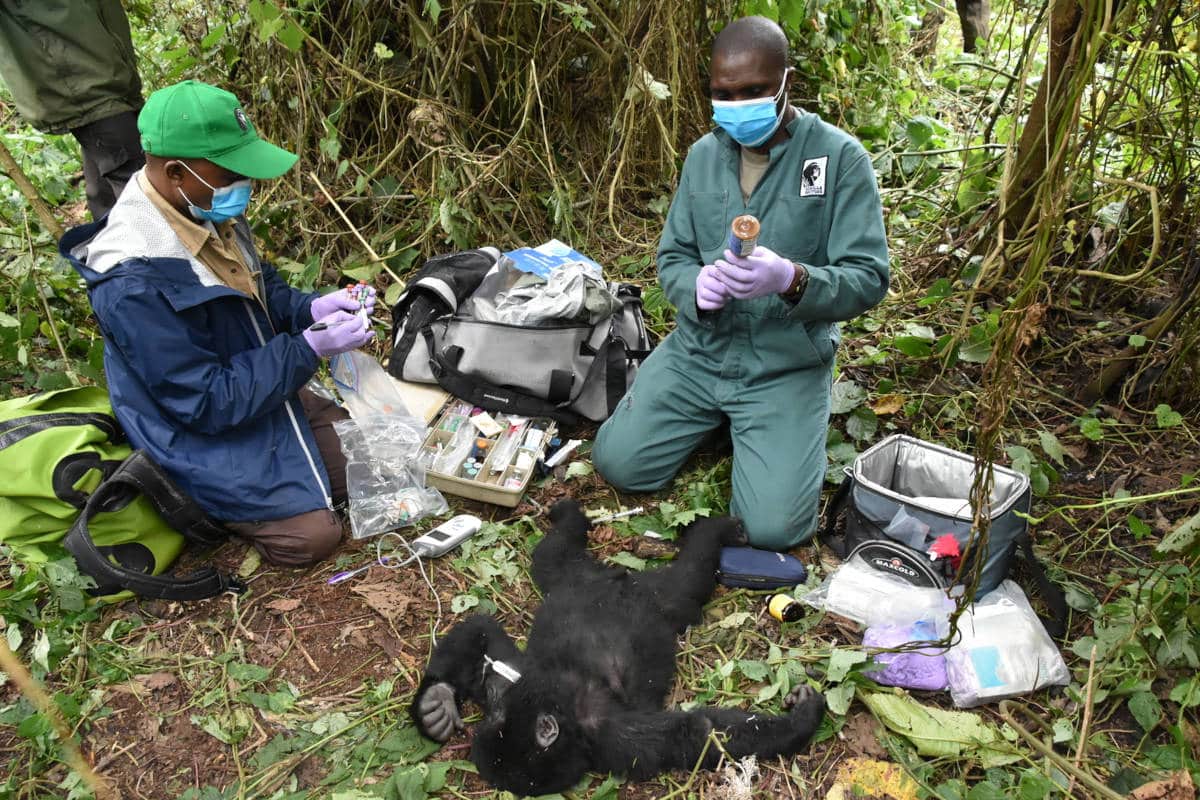
- Full Intervention: the gorilla is anesthetized (via dart) for hands-on veterinary care
If anesthesia is required, we treat our patient right there in its forest home. Our veterinarians are surrounded by the intervention team (trackers, rangers, and porters) who help keep everyone safe from agitated silverbacks and other members of the gorilla group. We work as quickly as possible to provide treatment, reverse the anesthesia, and get our patient back with its gorilla family with the least disruption.
Structure of an Intervention: Snare Rescue
(photos and videos are from a collection of multiple interventions)
Step 1
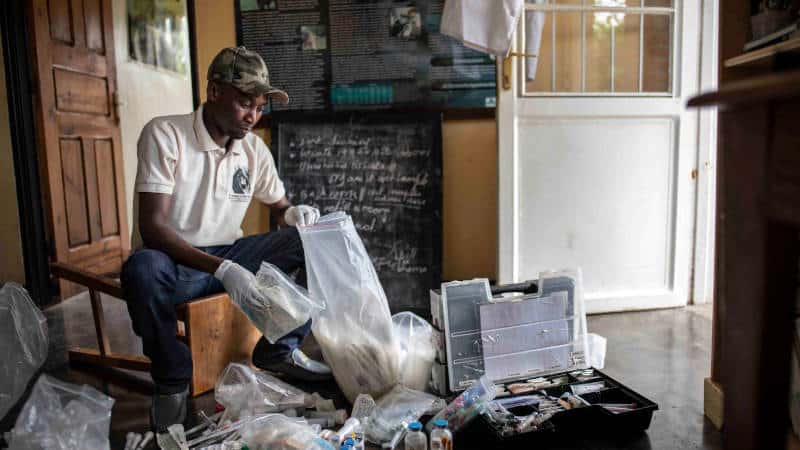
‘Go bag’ medical kits are stocked and ready to go.
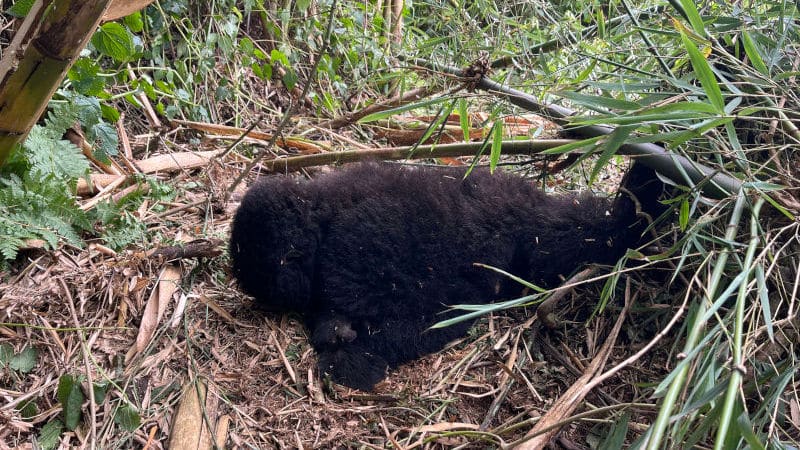
Step 2
Answer the call: Interventions are often ‘emergency’ situations, like an infant caught in a snare.
Step 3
Race into our forest hospital: Locate the gorilla patient.
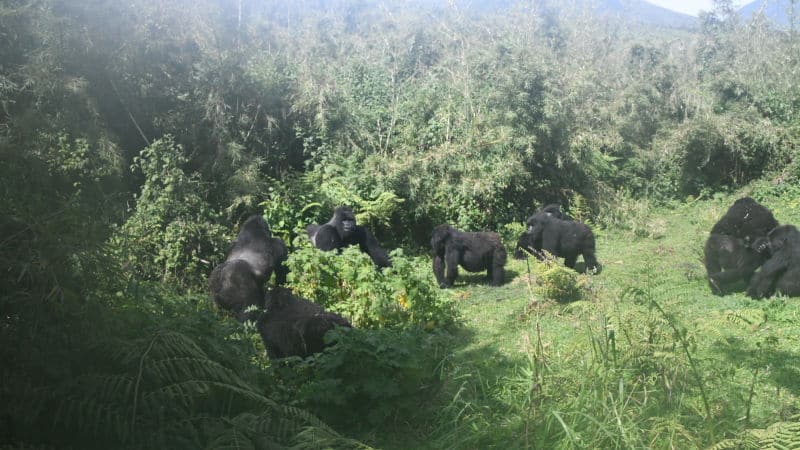
Step 4
Assess the situation: Is the infant still attached to the snare? How agitated is the group? Where are the silverbacks? Where is the mother? Will the mother need to be anesthetized?
Step 5
Prepare anesthetic dart for immobilization.
Step 6
Successfully dart the infant (and possibly the mother) out of the silverbacks’ direct line of sight; wait for the anesthesia to take effect.
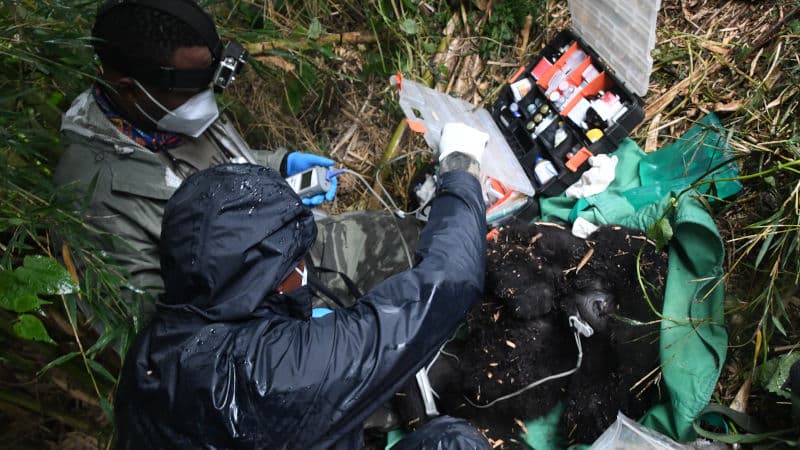
Step 7
Remove snare, treat wounds, administer antibiotics and anti-inflammatories. Conduct a rapid physical exam and collect biological samples. Reverse the anesthesia.
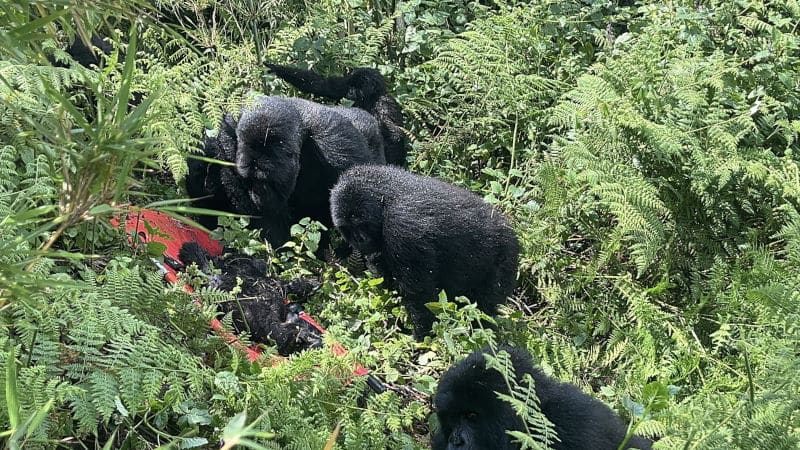
Step 8
Reunite the infant with its gorilla family: Stay and observe behavior to ensure successful recovery from anesthesia and treatment.
Step 9
Trek out of the forest and return to field station.
Cost of an Intervention
It costs an average of $3,800 USD to conduct a clinical intervention for a gorilla in need of medical attention. This includes follow-up veterinary monitoring visits to ensure a full recovery. Sometimes additional interventions are necessary to complete treatment.
Supplies and Equipment (in USD)
- Fuel = $270 (includes follow-up trips post-intervention)
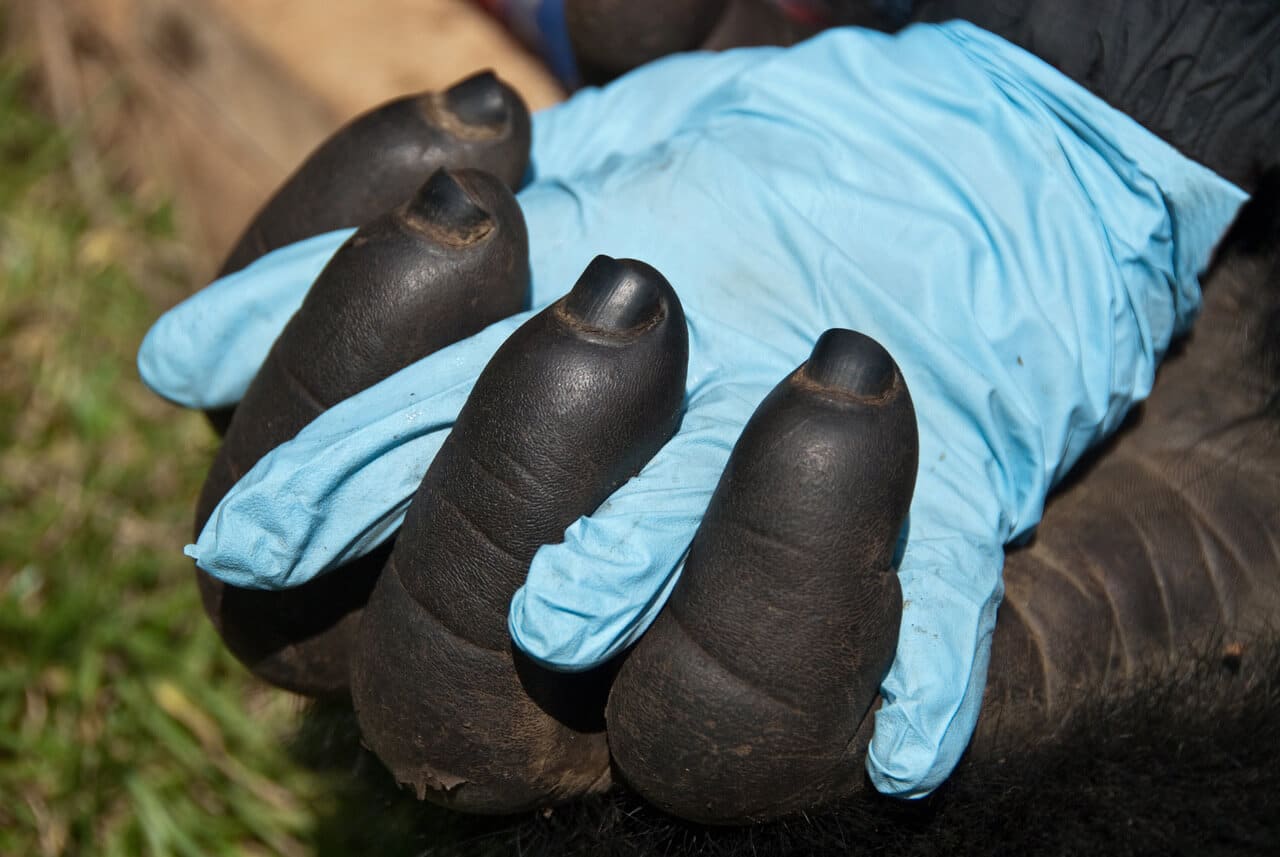
- Personal Protective Equipment (PPE) = $100 (gloves, masks, safety glasses)
- Wound care = $45 (antiseptic solution, gauze, sponge, etc.)
- Medication = $160 (antibiotics, anti-inflammatories, etc.)
- Anesthetic drugs = $185
- Laboratory diagnostic supplies = $200 (for collection of biological samples)
For each intervention, we employ:
- Four porters = $120 (to help carry supplies and equipment into the forest)
- Two field veterinarians = $2,420
- Laboratory technician = $300
Connect With Us
"*" indicates required fields